

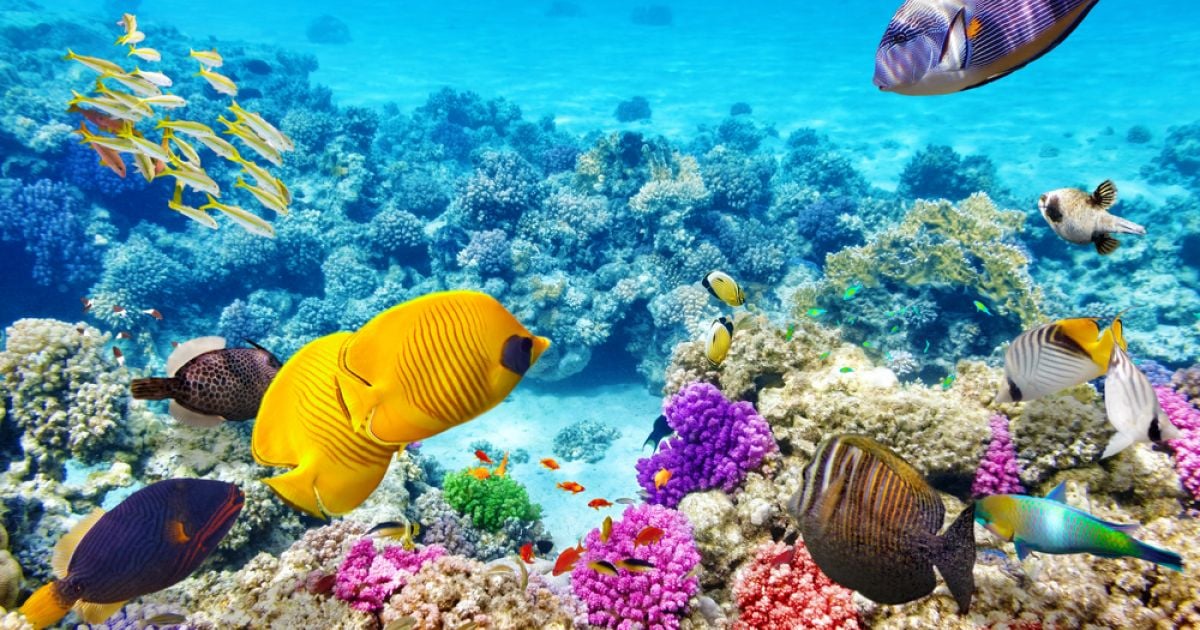
The world’s coral reefs are dying at an alarming rate. Rising ocean temperatures, plastic waste, chemical pollution, and overfishing have pushed these underwater rainforests to the brink of collapse. For decades, marine biologists have struggled to monitor, protect, and restore these fragile ecosystems using conventional tools like human divers, stationary sensors, and propeller-driven underwater vehicles. But now, a new silent, agile, and intelligent guardian has emerged from the laboratories of marine robotics. It does not eat, it does not sleep, and it does not scare the local wildlife. It is the robot fish, and it has officially started patrolling the world’s most vulnerable coral reefs.
This article explores the breakthrough technology behind robot fish, how they are revolutionizing reef conservation, their advantages over traditional methods, real-world deployment examples, environmental and ethical implications, and the future roadmap for autonomous underwater robotics in marine protection. By the end, you will understand why robotic fish are no longer science fiction but an operational reality swimming alongside living corals today.
Why Coral Reefs Need a New Kind of Guardian
Before diving into the technology, it is essential to understand the severity of the coral reef crisis. Coral reefs occupy less than one percent of the ocean floor yet support approximately twenty-five percent of all marine species. They provide food, coastal protection, tourism revenue, and even medical resources to over half a billion people. The economic value of coral reefs is estimated at nearly ten trillion dollars per year.
However, according to the Global Coral Reef Monitoring Network, fourteen percent of the world’s coral reefs disappeared between 2009 and 2018. The primary threats include:
-
Ocean acidification – caused by increased CO₂ absorption, which weakens coral skeletons.
-
Thermal bleaching – when water temperatures rise just one degree Celsius above normal for extended periods, corals expel their symbiotic algae and turn white.
-
Plastic pollution – over eleven billion plastic items are entangled in reefs across the Asia-Pacific region, spreading disease.
-
Chemical runoff – agricultural fertilizers and industrial waste create toxic algal blooms that block sunlight and suffocate corals.
-
Destructive fishing – blast fishing and cyanide fishing shatter reef structures instantly.
Traditional monitoring methods have proven inadequate. Human divers are expensive, limited to short dive times, and can accidentally damage delicate corals. Stationary sensors only record data at fixed points. Remotely operated vehicles (ROVs) with propellers stir up sediment, scare marine life, and cannot navigate tight crevices. This is precisely where robot fish solve the problem.
What Is a Robot Fish? Understanding the Bionic Design
A robot fish is a bio-inspired autonomous underwater vehicle (AUV) designed to mimic the locomotion, appearance, and behavior of real fish. Unlike conventional submarines or torpedo-shaped drones, robot fish use flexible bodies, oscillating tails, and fin-like appendages to move through water. The goal is not merely imitation but functional equivalence – swimming efficiently, silently, and unobtrusively in complex underwater environments.
The first functional robot fish for environmental monitoring was developed by the Massachusetts Institute of Technology (MIT) in the 1990s under the project name Robotuna. That early prototype was large and tethered. Today, robot fish have evolved into compact, untethered, solar-charging, AI-driven devices that can swim for hours or even days.
Key Components of a Modern Robot Fish:
A. Propulsion system – Instead of a propeller, robot fish use a servo-actuated tail fin that beats side to side. Some advanced models use artificial muscles made of electroactive polymers that contract and expand like real muscle fibers.
B. Sensory array – These include pH sensors, temperature gauges, turbidity detectors, hydrophones for sound recording, high-definition cameras, and chemical sniffers that can detect heavy metals or microplastics.
C. Artificial intelligence (AI) processor – Onboard machine learning algorithms help the robot fish recognize specific marine species, avoid collisions, track pollution plumes, and even distinguish between a healthy coral and a bleached coral in real time.
D. Communication system – Most robot fish use acoustic modems to transmit data to surface buoys or underwater docking stations. Newer models are experimenting with low-frequency radio waves and LED-based underwater Li-Fi.
E. Power source – Lithium-ion batteries are standard, but breakthrough models integrate flexible solar panels along the dorsal fin or use seawater batteries that generate electricity from dissolved oxygen.
F. Biomimetic skin – To blend in completely, many robot fish are covered in a soft, silicone-based skin with artificial scales. Some high-end prototypes even possess color-changing abilities using reflective displays, allowing them to mimic the patterns of local fish species.
How Robot Fish Are Welcomed by the Coral Reef Ecosystem
The phrase “welcomes” in the title is deliberate and significant. Coral reef inhabitants are notoriously skittish. A large, noisy, bright yellow submarine drone with spinning blades sends most fish darting into hiding. In contrast, robot fish cause little to no disturbance. Scientists have observed that real fish and other reef creatures – including sea turtles, octopuses, and even sharks – treat robot fish as neutral or even curious companions.
In a 2022 field study conducted along the Great Barrier Reef, researchers deployed a biomimetic robot fish named “SoFi” (Soft Robotic Fish) developed by MIT’s Computer Science and Artificial Intelligence Laboratory (CSAIL). SoFi swam among schools of tropical fish for over forty minutes without triggering any escape response. Some juvenile fish swam alongside it as if following a leader. This behavioral acceptance is a breakthrough because it means robot fish can collect natural, unbiased behavioral data without human presence skewing the results.
Practical Applications of Robot Fish in Coral Reef Conservation
Robot fish are not just research toys. They are being deployed today for specific, measurable conservation tasks. Below are the primary applications, listed in alphabetical order of function:
A. Bleaching detection and early warning – Robot fish equipped with thermal cameras and spectral sensors can patrol large reef areas daily, detecting the first signs of bleaching before it becomes visible to satellites. They transmit GPS-tagged heat maps to marine park managers.
B. Coral larval dispersal tracking – During spawning events, robot fish follow coral egg-sperm bundles to study where they drift. This helps identify which reef areas naturally reseed neighboring damaged zones.
C. Invasive species removal – Some experimental robot fish are programmed to hunt lionfish – an invasive species devastating Caribbean reefs. The robot fish either electrocutes the lionfish or injects a lethal saline solution, then returns to a collection station. This is far more precise than human spearfishing.
D. Microplastic sampling – A robot fish can filter hundreds of liters of water through a mesh net integrated into its gill slits, capturing microplastic particles for later laboratory analysis. Data on plastic concentration is mapped in 3D over time.
E. Noise pollution monitoring – Using onboard hydrophones, robot fish record underwater noise from cargo ships, sonar, and seismic blasting. Coral reef fish larvae use sound cues to find healthy reefs; excessive noise drives them away. Robot fish help identify noise hotspots.
F. Real-time water quality mapping – pH, dissolved oxygen, salinity, and turbidity sensors allow robot fish to create high-resolution chemical maps of entire reef systems. If a pollution plume from a river or sewage outpipe reaches the reef, robot fish detect it within minutes and send alerts.
G. Selective crown-of-thorns starfish control – These starfish eat coral polyps and have caused massive reef destruction. Robot fish equipped with computer vision can identify, approach, and inject vinegar or bile salts into individual crown-of-thorns starfish without harming nearby corals.
H. Tourism and education – In controlled areas like marine parks and public aquariums, robot fish serve as interpretive guides. Visitors watch them interact with real fish while learning about reef conservation through augmented reality overlays on waterproof tablets.
Comparison: Robot Fish vs. Traditional Reef Monitoring Methods

To appreciate the value, here is a structured comparison using lettered points:
A. Cost per hour of observation
-
Human diver: $200–500 (including boat, gear, and safety)
-
Propeller ROV: $100–300 (plus support vessel)
-
Robot fish: $5–20 (after initial purchase; mainly electricity and data upload)
B. Maximum continuous mission time
-
Human diver: 45–60 minutes (limited by air tank)
-
Propeller ROV: 2–6 hours (battery-dependent)
-
Robot fish: 8–72 hours (depending on model and swimming speed)
C. Animal behavioral disturbance
-
Human diver: High (bubbles, noise, movement)
-
Propeller ROV: Very high (motor whine, water jet)
-
Robot fish: Very low to none (silent, natural motion)
D. Ability to navigate coral crevices
-
Human diver: Medium (body size limits access)
-
Propeller ROV: Low (propellers snag or stir sediment)
-
Robot fish: High (flexible body and small cross-section)
E. Data collection consistency
-
Human diver: Variable (fatigue, skill level)
-
Propeller ROV: Good but limited
-
Robot fish: Excellent (standardized sensors, repeatable routes)
F. Public engagement and education
-
Human diver: Low (only for those in water)
-
Propeller ROV: Medium (often tethered to a screen)
-
Robot fish: High (charismatic, photogenic, non-threatening)
Real-World Deployment Examples: Where Robot Fish Are Already Swimming
The transition from laboratory to ocean has happened faster than many predicted. Here are notable deployments as of 2024–2025:
-
Great Barrier Reef, Australia – A fleet of five SoFi-style robot fish patrols the Agincourt Reef ribbon system. They collect water chemistry data daily and have identified two previously unknown thermal refugia – areas where corals survive despite regional bleaching events.
-
Maldives – The Maldives Marine Research Institute uses solar-powered robot fish shaped like clownfish to monitor coral nursery frames. The robot fish check for broken attachments, algae overgrowth, and predator intrusion. Data is sent via LoRaWAN to floating buoys.
-
Florida Keys National Marine Sanctuary, USA – A robot manta ray developed by a university–industry consortium tracks the spread of stony coral tissue loss disease (SCTLD). It uses fluorescence imaging to detect infected polyps before visible symptoms appear.
-
Bali, Indonesia – A low-cost open-source robot fish design called “ReefBot” has been deployed by local communities. It costs under $500 to build and focuses on plastic debris mapping. Over one year, it helped remove over 2,500 plastic bags entangled in coral heads.
-
Red Sea, Saudi Arabia – KAUST (King Abdullah University of Science and Technology) runs a swarm of nine miniature robot fish that cooperate like a school. They share data via underwater acoustics and can surround a pollution source from multiple angles to calculate its exact origin.
Environmental and Ethical Considerations
No technology is free of drawbacks or ethical questions. Robot fish are no exception. Below are the major concerns and ongoing debates.
A. Battery leakage risk – If a robot fish is damaged by a shark or crushed in a storm, its lithium-ion battery could leak toxic chemicals. Manufacturers are transitioning to biodegradable batteries or solid-state batteries that pose lower risks.
B. False imitation leading to predation – Some real fish might try to mate with robot fish, or predators might attempt to eat them. While rare, this could create unnatural behaviors. Mitigation includes making robot fish visually distinct in ultraviolet patterns that only machines can read.
C. Data ownership and surveillance – Who owns the video and chemical data collected? Could governments use robot fish for military surveillance under the guise of conservation? International guidelines are being drafted under the UN Convention on the Law of the Sea (UNCLOS).
D. Reduction of human involvement – Over-reliance on robots might reduce public funding for marine biology training and local diver employment. Conservation projects must balance technological tools with community capacity building.
E. Maintenance and waste – Robot fish have lifespans of two to five years. After that, they become electronic waste. A circular economy approach is emerging: modular designs allow sensor upgrades while reusing the body and tail motor.
The Future: Next-Generation Robot Fish Capabilities
Within the next decade, robot fish will evolve from monitoring devices to active ecosystem engineers. Here is what leading laboratories are developing right now:
A. Coral planting robots – Future robot fish will carry tiny coral fragments glued to biodegradable plugs. Using suction cups on their bellies, they will attach these fragments to dead reef skeletons with surgical precision.
B. Autonomous docking and charging stations – Underwater wireless charging pads shaped like cleaning stations will allow robot fish to refuel and upload data without human intervention. Some designs use wave-energy converters to generate power locally.
C. Swarm intelligence for large-scale restoration – Hundreds of miniature robot fish will coordinate like a flock of birds to replant entire reef sections simultaneously. Each unit will communicate position and progress every second.
D. Hybrid biological-robotic fish – Researchers are experimenting with living muscle tissue grown from fish stem cells wrapped around robotic skeletons. These cyborg fish would repair themselves and eventually biodegrade into harmless nutrients.
E. Machine learning for predictive conservation – Instead of just reporting problems, future robot fish will forecast them. By training AI on years of reef data, a robot fish could predict next month’s bleaching severity and autonomously alert hatcheries to move coral larvae to safer waters.
Challenges That Remain Unsolved
Despite the excitement, several significant barriers must be overcome before robot fish become a global standard:
-
Cost of entry – High-performance robot fish still cost 10,000to50,000 per unit, which is prohibitive for developing nations that have the most coral reefs.
-
Durability in storms – Category 1 hurricanes or even strong swells can smash robot fish against rocks. No model yet survives extreme wave action reliably.
-
Biofouling – Barnacles, algae, and tubeworms grow on robot fish within weeks, altering their swimming dynamics and blocking sensors. Antifouling coatings exist but eventually wear off.
-
Legal framework – Who is responsible if a robot fish gets lost and drifts into a marine protected area or another country’s waters? International liability laws for autonomous underwater robots are virtually nonexistent.
How You Can Support Robot Fish Conservation Efforts
You do not need to be a marine engineer to help. Here are practical actions for individuals and organizations:
A. Donate to open-source robot fish projects – Groups like OpenROV (now Sofar Ocean) and The ReefBot Initiative publish free designs. Donations fund field testing in low-income coastal communities.
B. Advocate for policy inclusion – Ask your local environmental agency to include robotic monitoring in their marine management plans. Many government budgets still lack line items for AUVs.
C. Reduce plastic and chemical runoff – The less pollution entering oceans, the fewer missions robot fish must spend on detection rather than restoration. Every piece of plastic kept from the sea helps.
D. Support university robotics labs – Many breakthroughs come from graduate student projects. Crowdfunding campaigns for new biomimetic designs are common and effective.
E. Visit responsibly – When snorkeling or diving near reefs where robot fish operate, do not chase or touch them. Allow them to collect data undisturbed.
Conclusion: A Silent Swimmer in a Dying World
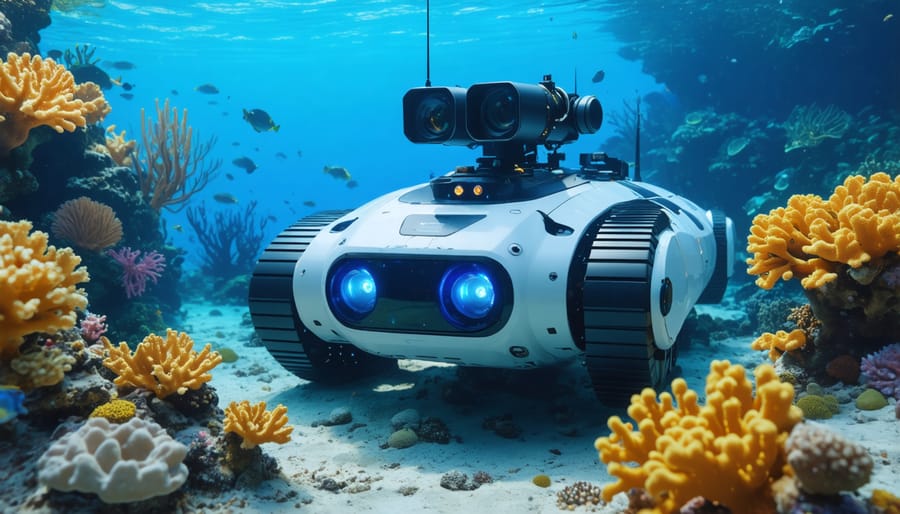
The arrival of robot fish on coral reefs marks a turning point not just in technology but in our relationship with nature. For centuries, humans have studied the ocean from the outside – from ships, from shores, from satellites. Robot fish represent the opposite approach. They enter the ecosystem not as conquerors but as passive observers, moving with the current, mimicking the inhabitants, and quietly recording the damage we have caused.
No robot fish alone will save the coral reefs. Without drastic global action on carbon emissions, ocean acidification will continue regardless of how many drones we deploy. However, robot fish give us something we have never had before – an affordable, continuous, non-invasive intelligence network beneath the waves. They provide the data to enforce pollution laws, the eyes to catch illegal fishing, and the gentle presence to educate future generations.
The coral reef does not welcome the robot fish as a savior. It welcomes it as a witness. And sometimes, bearing witness is the first step toward justice.
As you read this article, somewhere in the Pacific, a soft robotic fish with a beating silicone tail is gliding past a bed of staghorn coral. Its camera is rolling. Its sensors are drinking in the chemistry of the water. It swims past a school of blue-green chromis that do not flee. For that fleeting moment, the robot fish belongs to the reef. And the reef, in its silent, desperate way, belongs to the robot fish.