

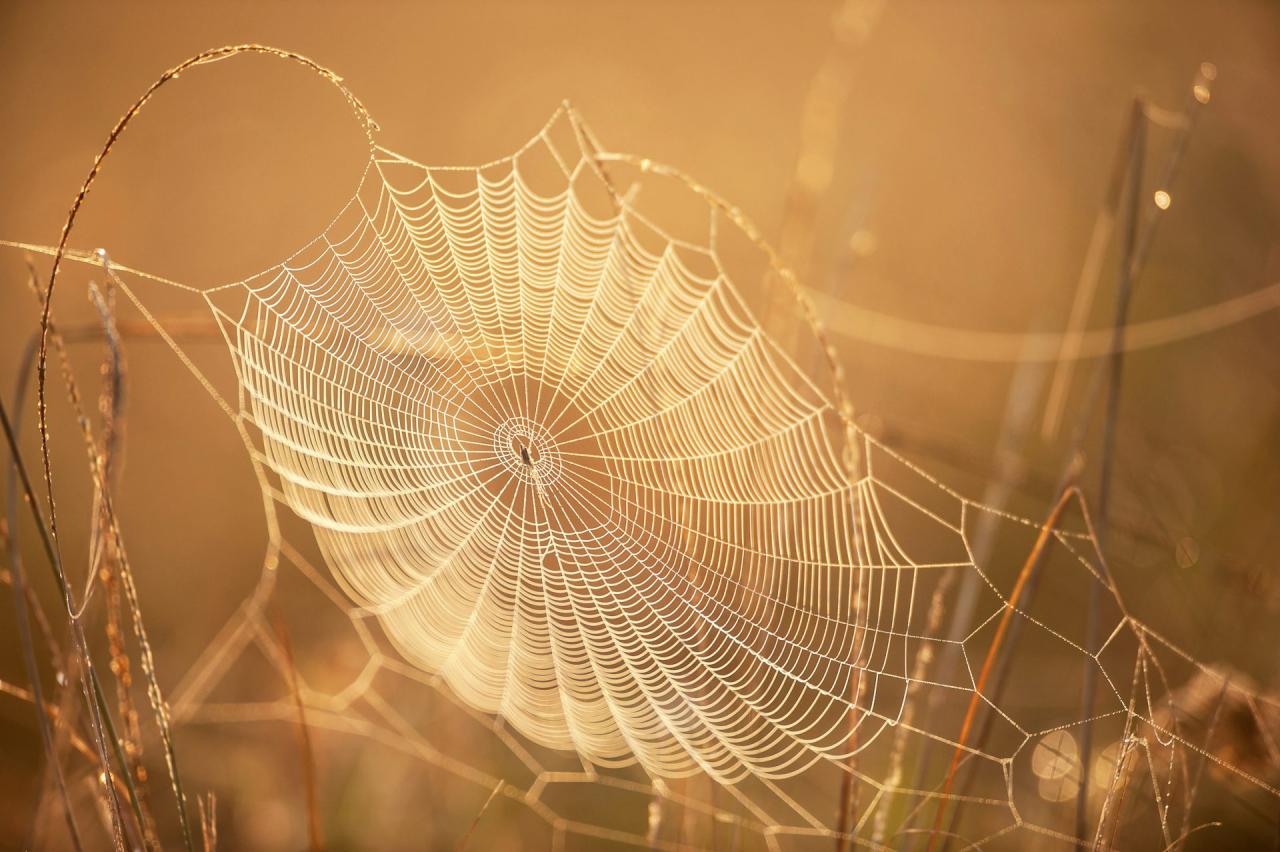
For centuries, humans have looked at spider webs with a mixture of fear, disgust, and occasional wonder. But beneath the delicate, sticky strands that glisten in morning dew lies one of the most extraordinary substances ever produced by a living creature. Scientists and engineers now agree on a startling fact: spider silk stronger than steel is not a myth or an exaggeration. Pound for pound, the silk produced by certain orb-weaving spiders outperforms high-grade alloy steel in tensile strength, toughness, and elasticity.
Yet, despite its incredible potential, we have only just begun to unlock the secrets of this biological marvel. Why is spider silk so powerful? How does it compare to steel, Kevlar, and synthetic fibers? And why, after decades of research, do we not yet have mass-produced spider silk clothing or bridge cables? This article will explore every facet of this remarkable material, from its molecular structure to its futuristic applications in medicine, defense, and sustainable manufacturing.
A. The Astonishing Properties of Spider Silk
To understand why spider silk stronger than steel has captured the imagination of material scientists, we must first break down its physical and chemical characteristics. Unlike steel, which is rigid and dense, spider silk is lightweight, flexible, and incredibly energy-absorbent.
A1. Tensile Strength vs. Toughness
Many people confuse strength with toughness. Here is the distinction:
-
Tensile strength refers to the maximum stress a material can withstand while being stretched or pulled before breaking.
-
Toughness is the ability to absorb energy and plastically deform without fracturing.
Steel has high tensile strength but relatively low toughness under dynamic impact it can snap. Spider silk, by contrast, has comparable tensile strength (approximately 1.1–1.5 GPa for dragline silk, compared to 0.4–1.5 GPa for structural steel) and far superior toughness. In fact, spider silk can absorb three times more impact energy than Kevlar, the material used in bulletproof vests.
A2. Elasticity and Extensibility
One of the most remarkable features of spider silk is its elasticity. A typical dragline silk thread can stretch 30-40% beyond its original length before breaking. Some types of silk, like flagelliform silk used in web capture spirals, can stretch over 200%. This combination of strength and stretchiness allows a spider’s web to absorb the kinetic energy of a flying insect without tearing something a steel wire of the same thickness could never do.
A3. Lightweight Nature
Steel has a density of about 7.85 g/cm³. Spider silk has a density of only 1.3 g/cm³. This means a strand of spider silk of the same diameter as a steel cable is nearly six times lighter. For aerospace, automotive, and military applications, weight reduction is critical. A material that is both stronger and lighter than existing options represents a revolutionary breakthrough.
A4. Biodegradability and Biocompatibility
Unlike steel or synthetic polymers, spider silk is made of proteins (spidroins) that are naturally broken down by the body without causing inflammation or toxicity. This makes it ideal for medical sutures, ligament repairs, and drug delivery systems. In the environment, spider silk decomposes over time, leaving no microplastic pollution a massive advantage over nylon or polyester.
B. How Spider Silk Compares to Other Materials
The claim “spider silk stronger than steel” needs context. Let us compare dragline spider silk with four common high-performance materials:
| Material | Tensile Strength (GPa) | Toughness (MJ/m³) | Density (g/cm³) | Elasticity (%) |
|---|---|---|---|---|
| Structural Steel | 0.4 – 1.5 | ~6 | 7.85 | ~0.2 |
| Kevlar 49 | 3.0 – 3.6 | ~50 | 1.44 | ~2.5 |
| Carbon Fiber | 3.5 – 5.0 | ~25 | 1.75 | ~1.5 |
| Spider Dragline Silk | 1.1 – 1.5 | 150 – 200 | 1.31 | 30 – 40 |
As the table shows, spider silk does not have the highest tensile strength Kevlar and carbon fiber beat it in pure pulling force. However, spider silk’s toughness is unmatched. A steel beam may hold more static weight, but a spider silk cable would survive repeated shocks, vibrations, and extreme stretching far better.
Thus, the accurate statement is: Spider silk is tougher than steel and as strong as steel by weight, but far more flexible and impact-resistant.
C. The Different Types of Spider Silk
Spiders are nature’s master weavers. A single orb-weaving spider can produce up to seven different types of silk, each with unique properties. Understanding these variations is key to replicating them for human use.
C1. Dragline Silk (Major Ampullate)
This is the silk often cited in “spider silk stronger than steel” claims. Spiders use it as the lifeline when falling and as the structural frame of their webs. It has the highest tensile strength and moderate elasticity.
C2. Capture Spiral Silk (Flagelliform)
Extremely elastic (up to 200-300% stretch), this silk coats the web’s sticky spirals. It needs to stretch without breaking when prey struggles, absorbing kinetic energy.
C3. Minor Ampullate Silk
Used to form the temporary scaffolding of a web before the final structure is built. It has lower strength but higher flexibility.
C4. Aciniform Silk
This silk wraps and immobilizes prey. It is incredibly tough but not as strong in pure tension.
C5. Tubuliform Silk (Egg Sac Silk)
The toughest and stiffest of all spider silks, designed to protect eggs from predators and weather. It has a unique structure with high resistance to compression.
C6. Pyriform Silk
Used as “glue” to attach silk threads to surfaces or to each other. It forms sticky discs.
C7. Aggregate Silk
A wet, glue-like substance that coats capture spirals, making them sticky.
Most research into “spider silk stronger than steel” focuses on dragline and tubuliform silks because of their superior mechanical properties.
D. Why We Can’t Farm Spiders Like Silkworms
If spider silk is so amazing, why are we not wearing spider silk shirts and driving cars with spider silk seatbelts? The answer lies in biology, behavior, and economics.
D1. Cannibalism and Territoriality
Unlike silkworms (Bombyx mori), which tolerate dense colonies, most spiders are solitary predators. When kept in close quarters, they eat each other. Attempts to create spider “farms” in Madagascar, Paraguay, and the United States have all failed because thousands of spiders quickly reduce their population to dozens.
D2. Low Silk Yield per Spider
A single silkworm can spin a cocoon containing up to 1,500 meters of continuous silk filament. A spider, by contrast, produces only a few milligrams of silk per day. To weave a single square meter of spider silk fabric, you would need approximately 400 spiders working for a year. Even then, the silk would be discontinuous and difficult to spin.
D3. The Golden Cape Experiment
In 2009, a team spent four years collecting silk from over one million female golden orb-weavers (Nephila clavipes) in Madagascar. They produced a hand-woven, 11-foot by 4-foot textile the only known large piece of naturally harvested spider silk fabric in existence. The cost? Over $500,000. That is not commercially viable by any stretch.
D4. Milking Difficulties
Spiders must be “milked” individually by hand or with specialized restraint devices. Each extraction yields a tiny droplet of silk protein from the spinnerets. The process is slow, labor-intensive, and stressful for the spider.
For these reasons, natural spider silk farming will never scale. The future lies in synthetic biology.
E. Synthetic Spider Silk: The Real Breakthrough
Since natural farming is impossible, scientists have turned to genetic engineering to produce artificial spider silk. The goal is not to copy nature perfectly but to replicate its protein chemistry using other organisms as living factories.
E1. The Recombinant Protein Approach
The genes responsible for spidroin (spider silk protein) production are sequenced and inserted into host organisms. These hosts then produce the same protein, which can be extracted, dissolved, and spun into fibers.
E2. Host Organisms Used for Synthetic Spider Silk
A. Genetically Modified E. coli Bacteria
-
Advantages: Fast growth, easy genetic manipulation, high protein expression.
-
Disadvantages: Proteins often form insoluble clumps (inclusion bodies) that must be refolded. Scale-up is complex.
B. Genetically Modified Yeast (Pichia pastoris)
-
Advantages: Better at protein folding, fewer contamination risks than bacteria.
-
Disadvantages: Lower overall yield per volume.
C. Transgenic Goats
-
How it works: Spider silk genes are inserted so that the goats produce spidroins in their milk.
-
Result: Each goat produces several grams of silk protein per liter of milk. The proteins are then purified and spun.
-
Historical note: This research, led by Nexia Biotechnologies in the 1990s, produced “BioSteel” but closed due to high costs.
D. Transgenic Silkworms
-
How it works: Editing silkworms to produce hybrid silkworm-spider silk.
-
Advantages: Silkworms already spin cocoons, requiring no new manufacturing process.
-
Challenges: Maintaining genetic stability over generations. Early fibers were weaker than natural spider silk.
E. Transgenic Plants (Tobacco, Alfalfa)
-
Advantages: Extremely scalable, low cost per gram.
-
Disadvantages: Slow protein extraction and purification. Risk of environmental gene escape.
E3. Current Commercial Successes
Several companies are now producing synthetic spider silk fibers and products:
-
Bolt Threads (USA) – Produces “Microsilk” using yeast fermentation. Their “Spider Coat” and tie were early prototypes. They now focus on consumer textiles under the brand “B-silk.”
-
Spiber (Japan) – Developed “QMONOS” through microbial fermentation. Used in a limited-edition The North Face Moon Parka.
-
Kraig Biocraft Laboratories (USA) – Uses transgenic silkworms to produce “Dragon Silk.” Focuses on military and aerospace applications.
-
AMSilk (Germany) – Produces biosteel fibers and silk biopolymers for medical coatings and cosmetics.
Despite these advances, synthetic spider silk still does not fully match the properties of natural dragline silk. Current synthetic fibers achieve about 70-80% of natural tensile strength and 50-60% of toughness. However, progress continues at a rapid pace.
F. Revolutionary Applications of Spider Silk
The phrase “spider silk stronger than steel” is exciting, but real-world applications will determine its value. Here is where synthetic spider silk is already being tested or deployed.
F1. Medical and Healthcare
A. Surgical Sutures
Spider silk is biocompatible, hypoallergenic, and promotes wound healing. Unlike conventional sutures, it does not need removal for many internal applications. It also provides better knot security.
B. Ligament and Tendon Repair
The elasticity and strength mimic natural human connective tissue. Scaffolds made of spider silk can guide cell growth while gradually biodegrading.
C. Nerve Regeneration
Spider silk filaments have been used as guiding structures for severed nerves to regrow across gaps. Early animal studies show restored function.
D. Drug Delivery
Thin silk films can encapsulate antibiotics or growth factors and release them slowly over weeks.
E. Artificial Corneas
Transparent, strong, and biocompatible silk-based contact lenses and corneal implants are in development.
F2. Defense and Ballistic Protection
Body armor (Kevlar) works but is heavy, retains heat, and does not stretch. Spider silk composites could produce:
-
Lightweight bulletproof vests with better mobility.
-
Blast-resistant blankets for vehicles.
-
Cut-resistant gloves and sleeves.
Because spider silk absorbs impact energy without shattering, it also reduces blunt force trauma behind the armor.
F3. Aerospace and Automotive
Weight reduction is everything in aircraft and spacecraft. Replacing steel cables or carbon fiber composites with spider silk-based materials could save fuel and increase payload.
Potential uses include:
-
Parachute cords and landing decelerators.
-
Airbag fabrics that are thinner yet stronger.
-
Tire reinforcement belts with higher fatigue resistance.
F4. Sustainable Textiles
The fashion industry is the second-largest polluter on Earth. Synthetic spider silk offers:
-
Biodegradable outdoor gear.
-
Luxury fabrics without petroleum or silk moth killing.
-
Breathable, moisture-wicking sportswear.
Companies like Bolt Threads have already sold limited quantities of spider silk neckties and jackets to collectors.
F5. Civil Engineering and Ropes
Imagine a suspension bridge cable that is lighter than steel but just as strong, immune to corrosion, and able to sway without breaking. Spider silk ropes could also be used in deep-sea anchors, tow lines, and climbing equipment.
However, uv radiation degrades spider silk over time, so outdoor applications require protective coatings.
G. Challenges Still Facing Spider Silk Commercialization
Despite decades of research, we do not yet have mass-market spider silk products. Here are the remaining obstacles:
G1. Reproducing Natural Alignment
Natural spider silk forms through a complex process of water extraction, pH changes, and mechanical drawing inside the spider’s duct. Synthetic spinning methods (wet spinning, dry jet spinning) cannot yet replicate this nanoscale alignment perfectly. Poor alignment means weaker fibers.
G2. High Production Costs
Recombinant proteins require sterilized bioreactors, purified water, expensive nutrients, and downstream processing. Current costs range from 100to500 per kilogram for raw protein far higher than polyester (1–2/kg)ornylon(3–5/kg). Until costs drop by 90%, spider silk remains a niche material.
G3. Scaling from Milligrams to Tons
Laboratory success with 10-liter fermenters does not guarantee success with 50,000-liter industrial fermenters. Protein expression, purification, and fiber spinning all behave differently at scale.
G4. Lack of Uniform Standards
Every company spins its own variant of spider silk. There is no ASTM or ISO standard for mechanical properties, biodegradation rates, or quality control. Buyers do not know what they are purchasing.
G5. Consumer Awareness
Most people still associate spider silk with webs in dusty corners, not advanced materials. Marketing and education will be required to drive adoption.
H. The Future: Bio-inspired Innovations Beyond Natural Silk
Scientists are not just copying spiders they are improving upon them. By using genetic engineering and synthetic chemistry, researchers have created spider silk variants that outperform anything found in nature.
H1. Metal-infused Spider Silk
By feeding spiders graphene or carbon nanotube solutions, researchers have produced silk that is five times stronger than normal. The nanomaterials integrate into the protein matrix without harming the spider.
H2. Hybrid Polymer-Silk Fibers
Combining synthetic spider silk with PVA (polyvinyl alcohol) or other biodegradable polymers creates fibers with tunable properties more rigid or more elastic per application.
H3. Self-healing Silk Materials
Researchers at the University of Cambridge have engineered silk hydrogels that heal tears within minutes when exposed to body temperature or specific pH triggers.
H4. 3D-printed Silk Structures
Instead of spinning fibers, scientists can dissolve recombinant spider silk into water and 3D print lattice structures, stents, or even artificial organs. The material solidifies as water evaporates.
I. Environmental and Ethical Considerations
No discussion of advanced materials is complete without asking: Is spider silk truly green?
I1. Positive Environmental Impact
A. Biodegradable – Unlike nylon or polyester, synthetic spider silk breaks down into amino acids without releasing microplastics.
B. No Petroleum Required – Production uses sugar, water, and microbial fermentation all renewable.
C. Low Carbon Footprint – Early life-cycle analyses suggest spider silk production emits 80-90% less CO₂ than nylon manufacturing.
D. No Animal Suffering – Transgenic microbes and plants do not feel pain. Transgenic silkworms and goats are treated with anesthetic protocols.
I2. Potential Concerns
A. Gene Escape – Genetically modified plants or silkworms could theoretically cross-breed with wild populations, though containment protocols exist.
B. Energy Use – Bioreactors require electricity for heating, cooling, and stirring. If the grid is coal-powered, the carbon benefit diminishes.
C. Land Use – Growing sugar for fermentation competes with food crops. Future solutions include using agricultural waste (corn stover, rice husks) as feedstock.
On balance, spider silk is vastly more sustainable than fossil-fuel-based synthetics and far more ethical than animal-derived silk (which kills the silkworm).
J. Conclusion: Will Spider Silk Replace Steel?
The answer is both yes and no. Spider silk stronger than steel will not replace structural steel in skyscrapers or bridges steel is far cheaper and stiffer. However, spider silk will replace steel in applications where weight, flexibility, toughness, or biocompatibility matter: medical implants, body armor, parachutes, aerospace composites, and luxury textiles.
We are currently in the “valley of disappointment” for spider silk research. The early hype of the 1990s has faded, and commercial products remain expensive and rare. But the fundamental science is sound. Each year, synthetic fibers get closer to natural silk’s properties. Each year, fermentation yields improve. Each year, production costs fall.
Within the next decade, you will likely wear, drive, or even implant something made from synthetic spider silk. And you will remember that the inspiration came from a humble garden spider, quietly producing a material that is, pound for pound, stronger than steel.