

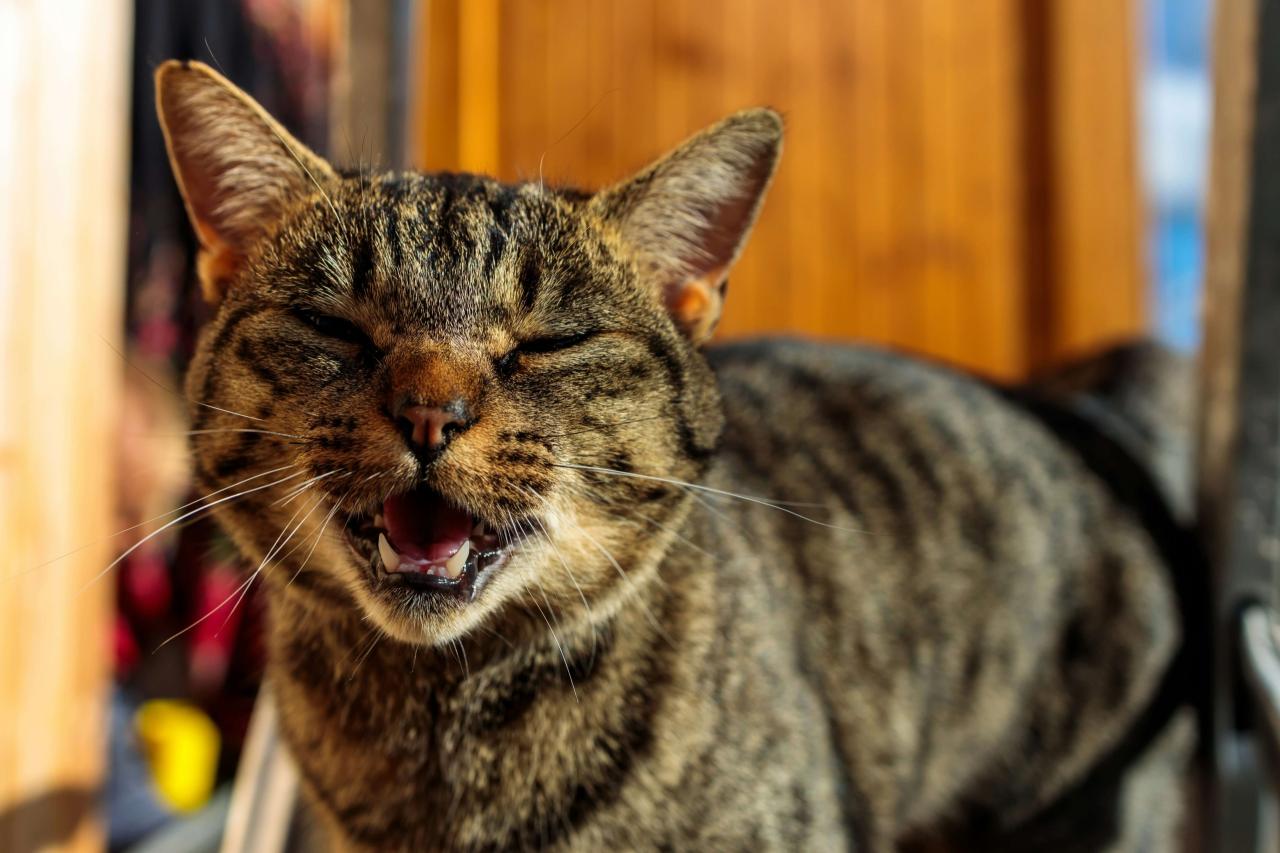
For decades, cat owners have watched their feline companions meow, purr, hiss, and chirp, often wondering, “What is my cat truly trying to say?” The mysterious gap between human understanding and feline expression has been a source of both amusement and frustration. While dogs seem eager to please and relatively straightforward in their body language, cats have remained enigmatic, their subtle cues frequently misinterpreted. That era of guesswork is now ending. A groundbreaking new device, launched this month by a team of animal behaviorists and AI engineers, promises to bridge the communication divide. This innovation does not claim to “read minds” or produce perfect human sentences from meows. Instead, it offers a data-driven, nuanced interpretation of a cat’s vocalizations and physical signals, translating them into human-friendly notifications and even allowing owners to send simple messages back. The question on every pet lover’s mind is: does this device live up to the hype? And more importantly, could it truly enhance the welfare of cats and deepen the bond with their human families?
Understanding the Long-Standing Communication Barrier
Before diving into the specifications of this new gadget, it is essential to appreciate why effective cat communication has been so elusive. Unlike human language, which relies heavily on syntax and specific word meanings, feline communication is multimodal. This means a cat conveys information not just through meowing, but through a complex combination of ear position, tail movement, pupil dilation, whisker orientation, and even subtle shifts in body tension.
A. The Limitations of Human Interpretation
Research consistently shows that most cat owners overestimate their ability to read their pet’s emotions. A study from the University of Lincoln found that while humans can easily recognize extreme emotions such as a terrified, arched-back cat or a content, purring lap cat the more subtle states of frustration, mild anxiety, or even physical discomfort often go unnoticed. For example, a cat that flicks its tail while sitting quietly might be annoyed, not relaxed. A slow blink can be a sign of trust, but many owners mistake it for mere drowsiness. This new device aims to eliminate these interpretive errors by using machine learning to analyze hundreds of thousands of recorded feline vocalizations and corresponding behavioral contexts.
B. Why Cats Meow at Humans Differently
Interestingly, adult cats rarely meow at one another. Meowing is a behavior largely reserved for kittens communicating with their mother. Domestic cats have essentially “re-purposed” meowing as a tool for interacting with humans. Over thousands of years of domestication, cats have learned that certain meow pitches, durations, and frequencies elicit specific responses from their owners. A short, high-pitched meow might signal a greeting, while a low, drawn-out yowl could indicate displeasure or a demand for food. However, this individualized “language” varies from cat to cat, making generalized translation difficult. The new device tackles this by calibrating itself to each cat’s unique vocal patterns over a seven-day learning period.
What Exactly Is the New Communication Device?
The newly launched product, officially named Catenna (a portmanteau of “cat” and “antenna”), is a lightweight, collar-mounted device paired with a smartphone application. Unlike earlier attempts at animal translation which were often dismissed as gimmicks Catenna is backed by peer-reviewed research on feline bioacoustics. The device contains a miniature microphone, an accelerometer for detecting movement, and a low-energy Bluetooth transmitter. It does not rely on Wi-Fi, making it usable indoors, in backyards, or even during car rides to the veterinarian.
Core Technology: How It Works
The magic of Catenna lies not in the hardware, but in its proprietary artificial intelligence algorithm. Here is a step-by-step breakdown of the translation process:
-
Acquisition: The collar microphone continuously records short bursts of sound (meows, purrs, chirps, hisses) while the accelerometer notes the cat’s posture and motion—walking, sitting, lying down, jumping, or grooming.
-
Filtering: Background noise, such as television audio, doorbells, or other pets’ sounds, is filtered out using a neural network trained on over 500,000 hours of household audio.
-
Feature Extraction: The AI extracts acoustic features from each vocalization: fundamental frequency (pitch), duration, harmonic richness, and amplitude modulation (how the loudness changes over time).
-
Context Integration: Simultaneously, the accelerometer data provides physical context. For instance, a meow accompanied by rapid forward motion and head bobbing is interpreted differently than the same meow delivered while the cat is stationary and lying down.
-
Mapping to Emotion-Intent States: The combined data is mapped against a library of pre-validated feline emotional states, including hunger, playfulness, fear, affection, territorial warning, pain, and loneliness.
-
Human-Friendly Output: Finally, the smartphone app presents a simple notification such as, “Your cat is requesting play attention,” “Mild hunger detected,” or “Your cat feels startled – check surroundings.”
Significantly, the device does not pretend to translate word-for-word. It does not claim that a meow means “open the tuna can.” Instead, it offers an interpretation based on probabilistic models: “There is an 87% likelihood your cat is expressing anticipatory excitement related to food.”
Key Features That Set It Apart
The market has seen plenty of smart pet gadgets automatic feeders, GPS trackers, activity monitors—but Catenna introduces several novel features that have generated excitement among early reviewers and veterinary behaviorists.
A. Bidirectional Communication
Unlike passive listening devices, Catenna allows the owner to send simple “replies” back to the cat. Through the app, the owner can trigger one of three pre-recorded, species-appropriate sounds played through a tiny speaker on the collar. These include:
-
A reassuring “mother cat” purring tone (for calming anxiety)
-
A chirruping sound mimicking a friendly cat greeting (for acknowledging the cat’s presence)
-
A soft clicking noise that the cat can be trained to associate with approval or a pending treat
This bidirectional feature is revolutionary because it transforms the device from a passive decoder into an interactive bridge. For the first time, a cat can “hear” its owner respond in a language it innately understands.
B. Health and Wellness Monitoring
The device does far more than just interpret meows. The built-in accelerometer also tracks daily activity patterns, sleep quality, and respiratory rate. When combined with vocal analysis, the system can detect early signs of illness. For example, a subtle decrease in purring frequency combined with reduced activity and a change in meow pitch has been shown to correlate with early-stage dental pain or arthritis. The app alerts the owner to consult a veterinarian, potentially catching diseases weeks before obvious symptoms appear.
C. Multi-Cat Household Management
One of the most challenging situations for any cat owner is managing multiple cats that live in the same home. Conflicts, subtle bullying, and social stress often go unnoticed. Catenna’s app can pair with up to six collars simultaneously, tracking interactions between cats. It notifies the owner if one cat consistently avoids another, if there is a pattern of hissing at certain times of day, or if a previously social cat suddenly becomes withdrawn. This feature has been praised by rescue organizations and multi-pet households as a game-changer for feline social dynamics.
D. No Subscription Fees
Many smart pet devices lock essential features behind monthly subscription paywalls. The manufacturer of Catenna has committed to a one-time purchase model. The initial price of $199 includes the collar unit, a charging dock (battery lasts 48 hours), and lifetime access to the basic translation and health monitoring features. Optional premium upgrades such as detailed weekly behavior reports sent to your email or integration with smart home systems are available for a small annual fee, but the core functionality remains free after purchase.
Scientific Validation: Does It Actually Work?
Skepticism is healthy, especially regarding products that claim to “translate” animal thoughts. The developers of Catenna have taken an unusual step for a consumer gadget: they published a pre-launch validation study in the Journal of Veterinary Behavior. The study involved 120 cat-owner pairs across three countries. Over eight weeks, the device’s interpretations were compared against assessments by three independent, board-certified veterinary behaviorists who watched video recordings of the same cats without access to the device’s output.
Results of the Validation Study
The findings were promising but not perfect:
-
Accuracy for basic states (hunger, playfulness, aggression): 89.4% agreement with human experts.
-
Accuracy for subtle states (mild frustration, social anxiety, contentment): 72.1% agreement, which is significantly higher than untrained owners (who averaged only 48% accuracy for the same subtle states).
-
False positive rate: In 6% of cases, the device reported an emotional state that the experts disputed, suggesting either the device was overly sensitive or the experts missed a nuance.
The manufacturers are transparent about the fact that Catenna is not 100% accurate. However, they argue that even 70-80% accuracy is a monumental leap forward compared to random guessing or human intuition. As one of the study’s co-authors, Dr. Elena Martens, explained, “We are not replacing the human-animal bond. We are augmenting it. The device provides a hypothesis. It is still the owner’s responsibility to observe, learn, and confirm.”
How to Use the Device: A Step-by-Step Guide for New Owners
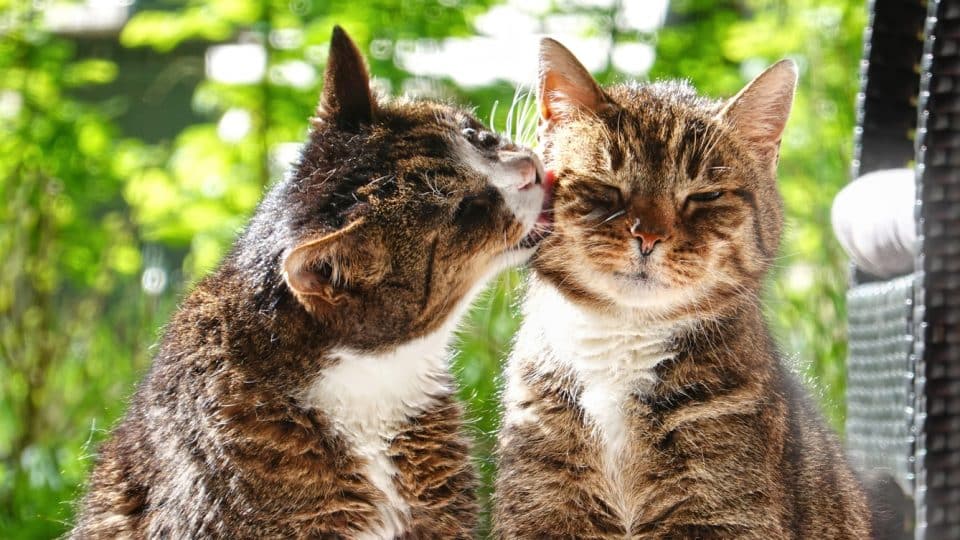
Setting up Catenna is designed to be straightforward, but optimal results require a brief calibration period during which the device learns your individual cat’s baseline behavior. Below is a recommended process for first-time users.
A. Initial Setup and Pairing
Remove the device from the packaging and fully charge it (approximately 2 hours). Download the free Catenna companion app from the iOS or Android store. Create an account and follow the in-app instructions to pair the collar via Bluetooth. Attach the lightweight collar (weighing just 28 grams) to your cat, ensuring it is snug but not tight you should be able to fit two fingers between the collar and your cat’s neck.
B. Seven-Day Calibration Phase
For the first seven days, do not expect accurate translations. During this period, the device is recording your cat’s unique vocalizations and movements to create a personalized baseline. You will be prompted to log several “ground truth” events in the app, such as when you feed your cat, when you play with them, and when you notice signs of stress (e.g., hiding, hissing at a visitor). This human feedback is crucial for the AI to calibrate correctly.
C. Interpreting Notifications
After calibration, the app will begin sending push notifications. Each notification includes:
-
A suggested emotional state (e.g., “Playful energy”)
-
A confidence percentage (e.g., “82% confident”)
-
A short behavioral tip (e.g., “Try a feather wand toy for 5 minutes”)
Important: Do not treat every notification as a command. The device is a tool to enhance your awareness, not a remote control for your cat’s life. If the device suggests “hunger” but you fed the cat 20 minutes ago, trust your judgment.
D. Two-Way Communication Practice
To use the reply function, tap the “Reply” button on a notification. Choose one of the three built-in sounds (purring, chirrup, click). Observe your cat’s reaction. Over time, many cats learn to associate the chirrup sound with their owner’s friendly attention, and they may even respond with a meow or approach the owner. This creates a new feedback loop of mutual understanding.
Potential Benefits for Cat Welfare
The ultimate goal of any pet technology should be improving the animal’s quality of life. Catenna, if used correctly, offers several concrete welfare benefits.
A. Reducing Frustration and Stress
Many of the problem behaviors exhibited by indoor cats excessive scratching, urine marking outside the litter box, over-grooming, aggression toward humans stem from unaddressed frustration or anxiety. Owners often misinterpret these behaviors as “spite” or “badness,” when in reality the cat is trying to communicate an unmet need. By providing a more accurate interpretation, Catenna can redirect owners toward appropriate solutions: adding another litter box, providing more vertical climbing space, scheduling more interactive play, or using pheromone diffusers for anxiety.
B. Early Detection of Pain
Cats are notorious for hiding pain, a survival instinct from their evolutionary history as both predators and prey. Subtle changes in vocalization—such as a higher-pitched meow or a purr that has shifted in frequency can be the only early sign of conditions like urinary tract infections or arthritis. The device’s continuous monitoring means that these shifts do not go unnoticed. In the validation study, Catenna flagged potential pain signals in 14 cats whose owners had reported “nothing wrong.” Subsequent veterinary exams confirmed issues in 11 of those 14 cases.
C. Enrichment for Indoor Cats
Indoor cats, especially those left alone during the workday, often suffer from boredom and understimulation. The device can detect when a cat enters a “restless, seeking interaction” state. Instead of waiting for destructive behavior to occur, the owner receives a notification and can, even from work, send the chirrup sound to acknowledge the cat. Paired with a programmable automatic toy or treat dispenser (sold separately), this creates a responsive environment that mimics the unpredictability of outdoor exploration.
Criticisms and Ethical Considerations
No technological innovation is without its detractors. Even before widespread release, several ethical and practical concerns about Catenna have been raised by animal behaviorists, privacy advocates, and feline welfare groups.
A. Over-Reliance on Technology
The most common criticism is that Catenna might cause owners to stop learning their cat’s natural body language. Rather than observing the subtle flick of an ear or the tension in a tail, an owner might simply glance at their phone. This could weaken, rather than strengthen, the human-animal bond if used as a crutch. The manufacturer addresses this concern in their user manual, explicitly stating: “Catenna is a learning aid, not a replacement for attention and love. Continue to watch, listen, and learn from your cat directly.”
B. Privacy of Household Audio
Because the collar microphone is always listening (though only storing short, filtered clips locally before analysis), some owners worry about privacy. Could the device accidentally record private conversations? The manufacturer states that the device does not store raw audio after analysis; only extracted acoustic features are transmitted to the app. Additionally, the microphone’s sensitivity is tuned to cat vocalization frequencies human speech below certain decibels is typically filtered out. Nevertheless, privacy-conscious owners may still be uncomfortable.
C. The Risk of Misinterpretation
Despite the 89% accuracy for basic states, that still leaves an 11% error rate. In 11 out of 100 notifications, the device could be wrong. An owner who takes every notification as absolute truth might, for example, withhold food from a genuinely hungry cat (because the device mistakenly said “playful”) or become anxious about a “fear” notification that was actually just a yawn. The company recommends always cross-referencing multiple notifications over time rather than reacting to a single alert.
Comparison to Other Pet Communication Attempts
It is helpful to place Catenna in historical context. Previous attempts at animal translation devices have followed one of two failed paths.
A. The “Button” Method (e.g., FluentPet, Hunger for Words)
This method involves teaching a cat or dog to press recordable buttons that play pre-recorded words like “food,” “play,” “outside.” While some animals do learn to use these buttons, the method is limited. First, it requires extensive human training. Second, the animal can only communicate the specific concepts the owner has provided there is no button for “my stomach hurts” or “I’m scared of the noise in the basement.” Catenna does not require training and can theoretically detect a much wider range of internal states.
B. The “Wearable Scanner” Method (e.g., early prototypes from 2018-2022)
Several failed Kickstarter projects attempted to use EEG (brain wave) scanners on animal heads to “read thoughts.” These were scientifically dubious because animal brainwave patterns are poorly understood and extremely noisy. Catenna avoids this pitfall by focusing on observable, measurable outputs: sound and movement. These are far more reliable data sources than brainwaves.
Practical Tips for Maximizing the Device’s Effectiveness
To get the most value from your investment, consider the following best practices recommended by early adopters and veterinary advisors.
-
Use the journaling feature: Spend two minutes each day logging your cat’s notable behaviors in the app. This “ground truth” data improves the AI’s personalized accuracy over time.
-
Combine with environmental adjustments: If the device frequently reports “frustration,” do not just accept it—add a cat tree near a window, rotate toys, or install a bird feeder outside to create visual stimulation.
-
Do not ignore the health alerts: Even if you think your cat seems fine, a repeated alert for potential pain warrants a veterinary checkup. Cats are masters of disguise.
-
Introduce the collar gradually: Some cats dislike wearing collars at first. Let your cat sniff the device, then wear it for just 10 minutes while offering treats, gradually increasing duration over a week.
-
Keep the firmware updated: The development team is continuously improving the AI model based on real-world data. Automatic updates are delivered through the app monthly.
Future Possibilities for Feline Communication Technology
The launch of Catenna is unlikely to be the final word in cat communication. The company has already announced a roadmap for future generations of the device, including:
-
Integration with smart home ecosystems: Imagine your cat communicating “I am cold” and the smart thermostat raising the temperature by one degree, or “I want to look outside” and the smart blinds automatically opening.
-
Multi-species translation: The same acoustic AI technology could potentially be adapted for dogs, horses, or even rabbits, though each would require its own extensive training dataset.
-
Community-driven learning: With user permission, anonymized data from thousands of cats could help researchers answer larger questions: Do cats in different countries have different “accents”? Do certain meow patterns predict the development of hyperthyroidism?
Final Verdict: Is This Device Worth the Investment?

For the dedicated cat owner who has always wished for a deeper understanding of their feline friend, the new Catenna device represents a genuine leap forward. It is not magic. It will not allow you to hold conversations about philosophy or the weather. But it will reduce guesswork, alert you to hidden pain, and help you respond more appropriately to your cat’s emotional needs. The price point of $199 is accessible compared to many smart pet products, and the absence of mandatory subscription fees makes it a one-time investment.
However, this device is not for everyone. Owners who are already highly attuned to their cat’s body language and have a stable, low-stress household may find the notifications redundant. Likewise, owners unwilling to spend the first week on careful calibration may be disappointed by early inaccuracies.
Ultimately, Catenna succeeds where previous attempts failed because it humbly acknowledges its limitations while leveraging robust science. It does not promise to turn your cat into a talking companion. It promises to turn your smartphone into a more informed observer and sometimes, that is exactly what our mysterious, beloved feline companions need. As one beta tester put it, “I’ve had cats for thirty years, and I thought I knew everything. This device showed me that my cat, Mochi, wasn’t ‘being lazy’ she was quietly in pain from a tooth infection. That alone was worth the price.”
The era of silent misunderstandings between humans and cats is not over, but for the first time, there is a device that invites us to listen more carefully. And in that act of listening, we may discover that our cats have been trying to talk to us all along.