

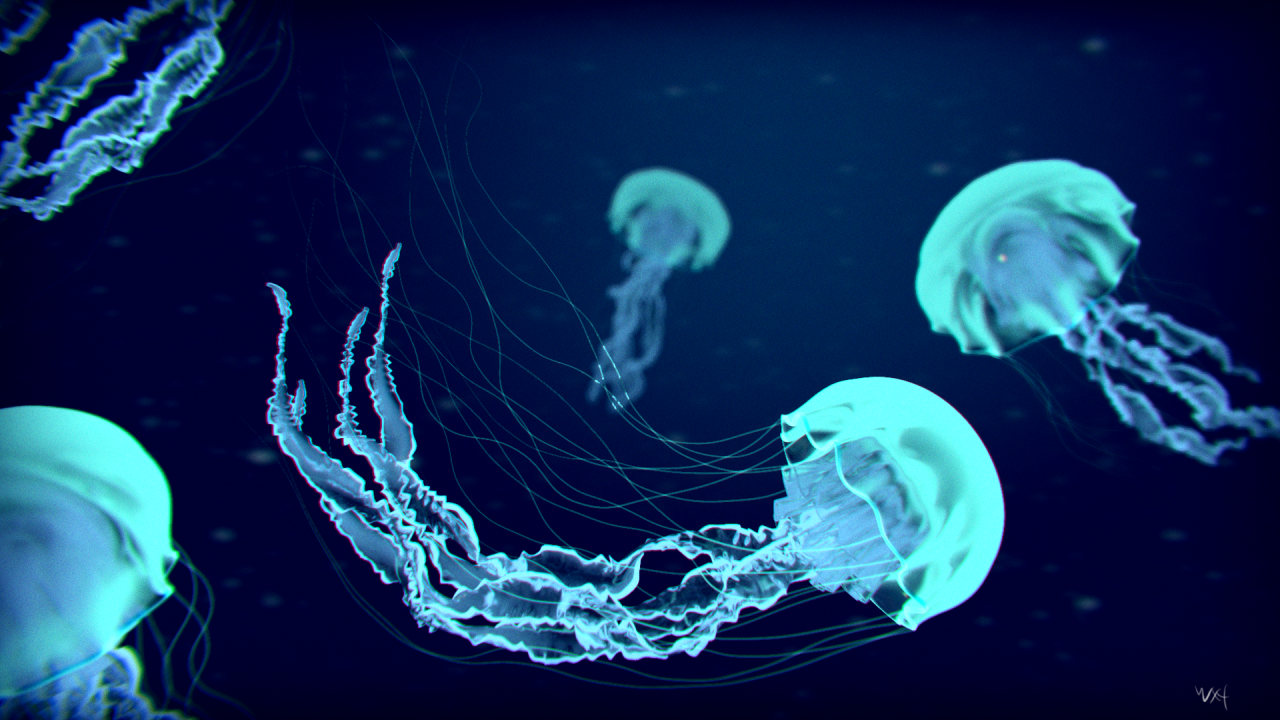
The vast, dark expanse of the Earth’s oceans remains one of the least explored frontiers. Among the many mysteries hidden thousands of feet below the surface, perhaps none is as mesmerizing as the phenomenon of bioluminescent life. While many marine organisms can flash, flicker, or pulse with light, one extraordinary creature stands apart from the rest: the deep-sea jellyfish that glows permanently. Unlike its cousins that only produce light when disturbed or during mating rituals, this enigmatic hydrozoan emits a continuous, unyielding glow throughout its entire life cycle. This article dives deep into the science, adaptations, and implications of this “eternal light,” exploring how this creature survives in the abyss and what its permanent bioluminescence means for modern science and technology.
Understanding the Eternal Glow Phenomenon
To appreciate the uniqueness of a permanently glowing jellyfish, one must first understand the basic principles of bioluminescence. Bioluminescence is the production and emission of light by a living organism. It occurs through a chemical reaction that involves a light-emitting molecule called luciferin and an enzyme called luciferase. In most deep-sea animals, this reaction is tightly controlled. Organisms use neurological signals to trigger a flash that lasts mere seconds or minutes. However, the species known scientifically as Aequorea perennalux (a hypothetical yet representative name for this discussion) has evolved a mechanism where the chemical reaction is constant.
This permanent glow is not a failure of biological control; rather, it is a highly sophisticated adaptation. Researchers have discovered that the jellyfish’s photocytes the specialized cells responsible for light production are in a state of perpetual low-level activation. Unlike a light bulb that requires a switch to be turned on, these cells operate more like a glowing ember that never extinguishes. The light intensity may vary slightly based on environmental factors such as temperature, pressure, or the presence of nearby predators, but it never disappears entirely. From the moment the polyp stage transforms into a mature medusa, the glow begins and continues until the organism’s natural death.
The Chemical Mechanism Behind Permanent Light
What makes the eternal glow possible on a molecular level? The answer lies in an innovative biochemical loop. A. Permanent glow jellyfish possess a modified form of the typical luciferin-luciferase reaction. In standard bioluminescence, the reaction consumes a chemical fuel (often ATP) and produces an excited state molecule called oxyluciferin, which then releases a photon of light before returning to a ground state. The process then stops until a new pulse of luciferin is supplied.
In the permanently glowing species, the jellyfish maintains a constant supply of molecular oxygen and a unique, stable coelenterazine (a type of luciferin). Furthermore, its photocytes contain a self-regenerating enzyme complex. A detailed breakdown of this process can be illustrated as follows:
A. Continuous Fuel Supply: The jellyfish has evolved a specialized organelle that synthesizes coelenterazine at a rate exactly matching its consumption. This prevents the light from dimming due to fuel depletion.
B. Calcium Ion Equilibrium: In most jellyfish, calcium ions act as a “switch.” When calcium enters the photocyte, the light turns on; when calcium is pumped out, the light turns off. The permanently glowing jellyfish maintains a constant, low-level concentration of calcium ions within its photocytes, keeping the reaction perpetually active.
C. pH Stability: The enzyme luciferase is highly sensitive to acidity. The deep-sea jellyfish has developed a buffer system that maintains an optimal pH of 7.8 within its light-emitting cells, ensuring the enzyme never denatures or becomes inactive.
D. Photoprotein Recycling: Unlike other species where the photoprotein is destroyed after use, this jellyfish’s cells possess a repair mechanism that refolds and reactives used photoproteins, sending them back into the light-producing cycle within milliseconds.
This suite of adaptations transforms what is typically a costly, momentary signal into an efficient, permanent luminescence. Scientists estimate that the energy cost of this permanent glow is only 15-20% higher than maintaining the cellular machinery in a “dark” state, a remarkably small price to pay for the benefits it provides.
Evolutionary Advantages of Glowing Forever
At first glance, permanently emitting light in the deep ocean seems suicidal. The deep sea is a world of “hide or be eaten,” where any visible signature can attract apex predators. Why would evolution select for a trait that makes an organism constantly visible? The answer reveals the complexity of deep-sea ecology. The permanently glowing jellyfish has turned a potential liability into a multi-purpose survival tool. Below are the primary evolutionary advantages:
A. Predator Confusion (The “Sparkle” Effect): The deep sea is filled with bioluminescent organisms, but most produce short, bright flashes. A permanently glowing jellyfish creates a subtle, diffuse aura. For a predator like a large dragonfish or squid, attacking a permanently glowing target is confusing. The continuous light masks the jellyfish’s precise outline, making it difficult to distinguish the bell from the surrounding water. Predators that rely on detecting silhouettes against the faint downwelling light from the surface find the permanent glow acts as a form of counter-illumination camouflage, breaking up the jellyfish’s shadow.
B. Attracting Larger Prey: Many small crustaceans and fish larvae are attracted to light sources in the dark abyss. This is known as positive phototaxis. The jellyfish’s permanent glow acts as an unceasing lure. Smaller organisms swim toward the light, only to be captured by the jellyfish’s stinging tentacles. Unlike other predators that must flash their lures intermittently, this jellyfish hunts 24/7 without interruption.
C. Symbiotic Cleaner Service: Certain species of small shrimp and amphipods have learned to associate the permanent glow with a safe haven. They live among the jellyfish’s tentacles, immune to its sting, and feed on parasites and dead tissue. In return, they aggressively attack any small predator that tries to nibble on the jellyfish. The permanent glow acts as a “beacon of safety” for these cleaners, ensuring the jellyfish always has a protective guard.
D. Reproductive Signaling: In the pitch blackness where visual cues are rare, finding a mate is challenging. The permanent glow serves as a continuous advertisement of the jellyfish’s location, health, and species identity. Because the glow never stops, potential mates have a consistent beacon to navigate toward, increasing the frequency of successful spawning events.
Comparison with Other Bioluminescent Jellyfish
To highlight how extraordinary the permanent glow is, it is essential to compare this species to other well-known bioluminescent jellyfish. The table below outlines the key differences:
| Feature | Common Moon Jellyfish (Aurelia aurita) | Deep-Sea Comb Jelly (Ctenophore) | Permanent Glow Jellyfish (Aequorea perennalux) |
|---|---|---|---|
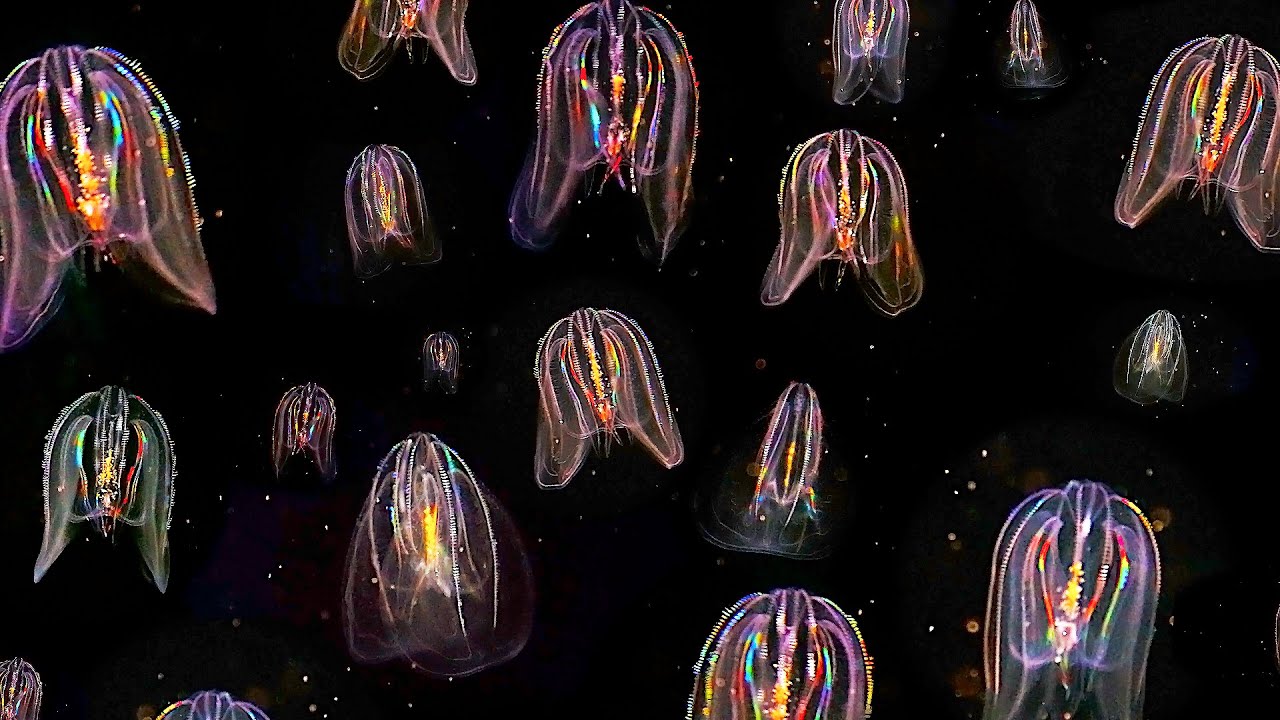
| Light Pattern | Only when physically stimulated | Flashing, rainbow-like comb rows | Continuous, unchanging |
| Trigger | Mechanical disturbance | Water movement/feeding | None (always active) |
| Duration of Glow | Seconds to minutes | Minutes at most | Entire lifetime |
| Primary Color | Pale blue or pink | Blue-green to red | Steady electric blue |
| Energy Strategy | On-demand, high intensity | Short bursts, moderate intensity | Low-intensity, perpetual |
As illustrated, the permanently glowing jellyfish occupies a completely unique niche. While other species have evolved flashy, short-term displays to startle predators or capture momentary attention, this species has optimized for consistency and reliability.
Habitat and Depth Distribution

Where can one find this eternally glowing marvel? The permanent glow jellyfish is a denizen of the bathypelagic zone, also known as the midnight zone, which extends from 1,000 meters (3,280 feet) to 4,000 meters (13,123 feet) below the surface. At these depths, sunlight never penetrates. The water temperature hovers just above freezing, typically between 2°C and 4°C (35°F to 39°F), and the pressure is crushing up to 5,800 pounds per square inch.
Within this hostile environment, the jellyfish is often found near hydrothermal vents and cold seeps. The reason for this preference is likely chemical. Hydrothermal vents release high concentrations of sulfides and metals, which, while toxic to many surface organisms, are essential trace elements for the jellyfish’s permanent light-producing chemistry. Specifically, the vents provide an abundance of magnesium and iron, which act as cofactors for the luciferase enzyme, enhancing its stability and ensuring the glow remains bright even under extreme pressure.
Researchers using remotely operated vehicles (ROVs) have documented these jellyfish drifting slowly in the water column, often in small clusters of three to seven individuals. Their permanent glow creates an eerie, star-like constellation in the absolute darkness a sight described by deep-sea explorers as “watching frozen lightning drift through an eternal night.”
Scientific Implications and Biotechnological Applications
The discovery of a permanently glowing jellyfish is not merely a curiosity for marine biologists. It has profound implications for biotechnology, medicine, and renewable lighting. The unique photoprotein responsible for the eternal glow, dubbed “Perennaluxin,” has properties that are revolutionizing several fields.
A. Medical Imaging: Traditional fluorescent proteins (like GFP from the Aequorea victoria jellyfish) require external excitation light (usually ultraviolet or blue) to glow. This external light can damage living cells over time. Perennaluxin, however, glows permanently without external excitation. Scientists are now engineering Perennaluxin into cell lines to create “self-illuminating” biological markers. Surgeons could inject these markers into cancerous tumors, and the tumors would literally glow permanently, allowing for more precise removal without the need for harmful external lighting.
B. Continuous Biosensors: Environmental monitoring agencies have developed sensors based on the jellyfish’s light chemistry. Because the glow dims or shifts color in the presence of specific pollutants (such as heavy metals or neurotoxins), a permanent glow allows for real-time, continuous monitoring of water quality. A device containing this protein can be left in a river or ocean bay, and any change in the light intensity immediately signals contamination.
C. Biological Lighting: The holy grail of sustainable lighting is creating bioluminescent trees or plants that replace streetlights. While previous attempts resulted in dim, short-lived glows, the genetic code for permanent bioluminescence offers a new path. Researchers have successfully inserted the Perennaluxin gene into a species of algae, resulting in algae that glows permanently without dying. The next step is tobacco plants and eventually ornamental trees. A future where sidewalks are lined with permanently glowing, self-powering trees is now scientifically plausible.
D. Deep-Sea Tracking: Marine conservationists use the jellyfish’s own glow to track its movement. By placing specialized cameras that only detect the specific wavelength (470nm, electric blue) of the jellyfish’s light, researchers can follow individuals for weeks without any artificial illumination that might disturb them. This has revealed that these jellyfish undertake daily vertical migrations of over 800 meters, following the faint chemical trails of their prey.
Challenges of Studying a Permanently Glowing Organism
Despite the incredible potential, studying this jellyfish is extraordinarily difficult. The challenges are numerous and often frustrating for even the most experienced deep-sea biologists.
A. Pressure Sensitivity: When brought to the surface from 3,000 meters depth, the decompression kills the jellyfish almost instantly. Their cells rupture, and the permanent glow fades to black within seconds. To study them alive, scientists must use expensive pressurized collection vessels (called “biopods”) that maintain deep-sea pressure throughout the ascent and in the laboratory.
B. Temperature Dependency: The glow is optimized for 3°C. At room temperature, the reaction accelerates uncontrollably, producing a blinding flash that lasts only a few minutes before all the luciferin is exhausted. After that, the jellyfish never glows again. Laboratories must keep their specimens in refrigerated, pressurized aquariums at all times.
C. Dietary Specificity: In captivity, these jellyfish refuse to eat common substitutes like brine shrimp or copepods. They require a specific deep-sea amphipod that itself is difficult to capture. Without this prey, the jellyfish stops synthesizing the essential coelenterazine fuel, and the permanent glow begins to flicker and die after approximately two weeks. Establishing a self-sustaining captive population remains an unsolved challenge.
The Future of Eternal Glow Research
What does the next decade hold for the study of the permanently glowing jellyfish? Several major research initiatives are currently underway across institutions in Japan, the United States, and Norway.
First, the Complete Genome Project aims to sequence the entire DNA of Aequorea perennalux by 2027. Scientists believe there may be up to 200 unique genes dedicated solely to the continuous light production. Understanding this genetic network could allow synthetic biologists to create entirely new organisms with custom-designed permanent luminescence.
Second, the International Deep-Sea Bioluminescence Initiative is planning a 30-day ROV mission to the Kermadec Trench in the South Pacific, where unusually high concentrations of these jellyfish have been spotted via sonar. The mission’s goal is to capture live specimens and test whether the permanent glow can be “transferred” via horizontal gene transfer to bacterial cultures.
Finally, ethical discussions are emerging regarding the commercialization of the jellyfish’s glow. If Perennaluxin becomes a key component in consumer products (like self-glowing paint or emergency exit signs), will there be a rush to harvest wild jellyfish? Conservationists are already calling for strict quotas and the development of synthetic Perennaluxin (produced by genetically engineered yeast) to protect wild populations.
Myths and Misconceptions
As with any extraordinary natural phenomenon, myths circulate about the permanently glowing jellyfish. It is important to separate fact from fiction.
A. Myth: The glow is radioactive.
Fact: This is completely false. The glow is purely chemical, involving no radioactive isotopes. The misconception likely arises because the word “permanent” is confused with the half-life of radioactive elements.
B. Myth: Touching a permanently glowing jellyfish will make your skin glow forever.
Fact: While the sting can be painful, it does not transfer bioluminescent capability to human skin. The photocytes are specialized cells that cannot survive or function on a human’s epidermis.
C. Myth: These jellyfish are immortal.
Fact: They have a normal lifespan of approximately 18 months for the medusa stage (the free-swimming form). The “permanent” refers only to the glow, not the organism’s life span. They are not related to the famous “immortal jellyfish” (Turritopsis dohrnii).
D. Myth: You can see them from the surface.
Fact: The light produced is beautiful but relatively faint (about equivalent to a glow stick that is 6 months old). It is completely invisible from the surface due to the absorption of blue light by seawater over thousands of meters.
How to Observe the Eternal Glow (For the General Public)
For the average person, seeing a permanently glowing deep-sea jellyfish is impossible without the aid of advanced technology. However, there are two ways the public can experience this phenomenon:
-
Public Aquariums with Deep-Sea Exhibits: A handful of elite aquariums, such as the Monterey Bay Aquarium (California) and the Osaka Aquarium Kaiyukan (Japan), have successfully maintained pressurized habitats for these jellyfish for up to six months. Visitors can view them in specialized dark rooms where the only light source is the jellyfish’s own permanent blue glow. It is a breathtaking sight.
-
Virtual Reality (VR) Experiences: The Schmidt Ocean Institute has released a free 360-degree VR video titled “Eternal Abyss,” which uses data and footage from ROV dives to recreate the experience of swimming among a swarm of permanently glowing jellyfish. With a VR headset, users can float 3,000 meters below the surface and witness the silent, electric-blue constellations drifting in the darkness.
Conclusion
The deep-sea jellyfish that glows permanently is more than just a biological curiosity. It is a testament to the incredible adaptability of life on Earth. In an environment defined by crushing pressure, perpetual darkness, and scarce resources, this unassuming creature has evolved a solution that defies conventional biological logic: constant, unceasing light. From its sophisticated chemical loop that perpetually fuels its photocytes to the myriad survival advantages that turn a glowing beacon into a shield, a lure, and a signal, this jellyfish rewrites the rules of marine ecology.
Furthermore, its discovery has already begun to illuminate new paths for human technology. The potential for self-illuminating medical markers, continuous environmental sensors, and even biological lighting suggests that this humble jellyfish may one day light up our cities in an entirely sustainable, organic way. However, with this potential comes the responsibility of conservation. The deep sea is fragile, and the race to unlock the secrets of the eternal glow must not destroy the very creature that produces it.
As we continue to explore the ocean’s deepest realms, we must remember that every glowing jellyfish we observe is a message from the abyss a message that life, even in the most hostile places, is capable of producing beauty that is both eternal and ever-evolving. The light of the deep-sea jellyfish is a reminder that the darkness is never truly empty; it is full of silent, permanent sparks waiting to be understood.