

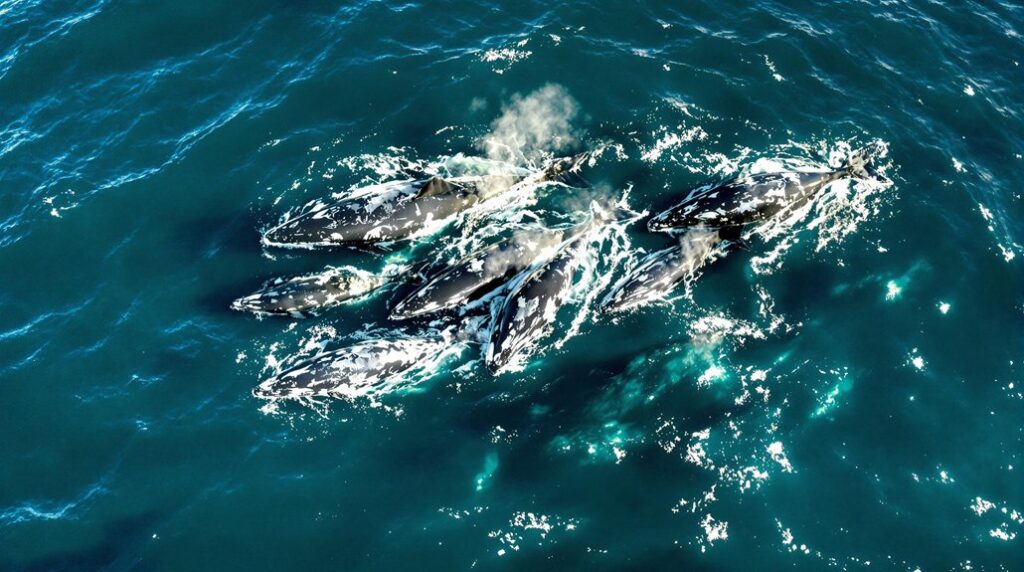
For centuries, the great whales have followed predictable paths across the world’s oceans. These ancient migratory corridors etched into the collective memory of humpbacks, blue whales, gray whales, and fins were once as reliable as the turning of the seasons. Sailors, fishermen, coastal communities, and marine biologists could anticipate where and when specific whale species would appear. Yet, in the last two decades, something remarkable and deeply concerning has begun to unfold. Whale migration patterns are shifting unexpectedly across both hemispheres. Routes that remained unchanged for thousands of years are now bending, shortening, lengthening, or disappearing entirely. Some whale populations are showing up in regions where they have never been recorded before. Others are delaying their departures or skipping their traditional feeding grounds altogether. This sudden and widespread behavioral shift is not merely a curiosity for marine scientists it carries profound implications for ocean ecosystems, global shipping industries, fisheries management, climate science, and eco-tourism.
Understanding why whales are changing their ancient travel plans requires a deep dive into the complex interplay of environmental cues, biological imperatives, and anthropogenic pressures. Historically, whales migrated for three primary reasons: access to rich feeding grounds in cold polar waters, safe and warm breeding lagoons in tropical or subtropical zones, and the protection of newborn calves from predators. The distance between these two worlds could span thousands of kilometers the longest known mammalian migration on Earth belongs to the gray whale, which travels over 10,000 miles round trip between Baja California’s lagoons and the Bering Sea’s nutrient-rich shallows. But those reliable patterns are now unraveling at an alarming rate.
The Historical Certainty of Whale Highways
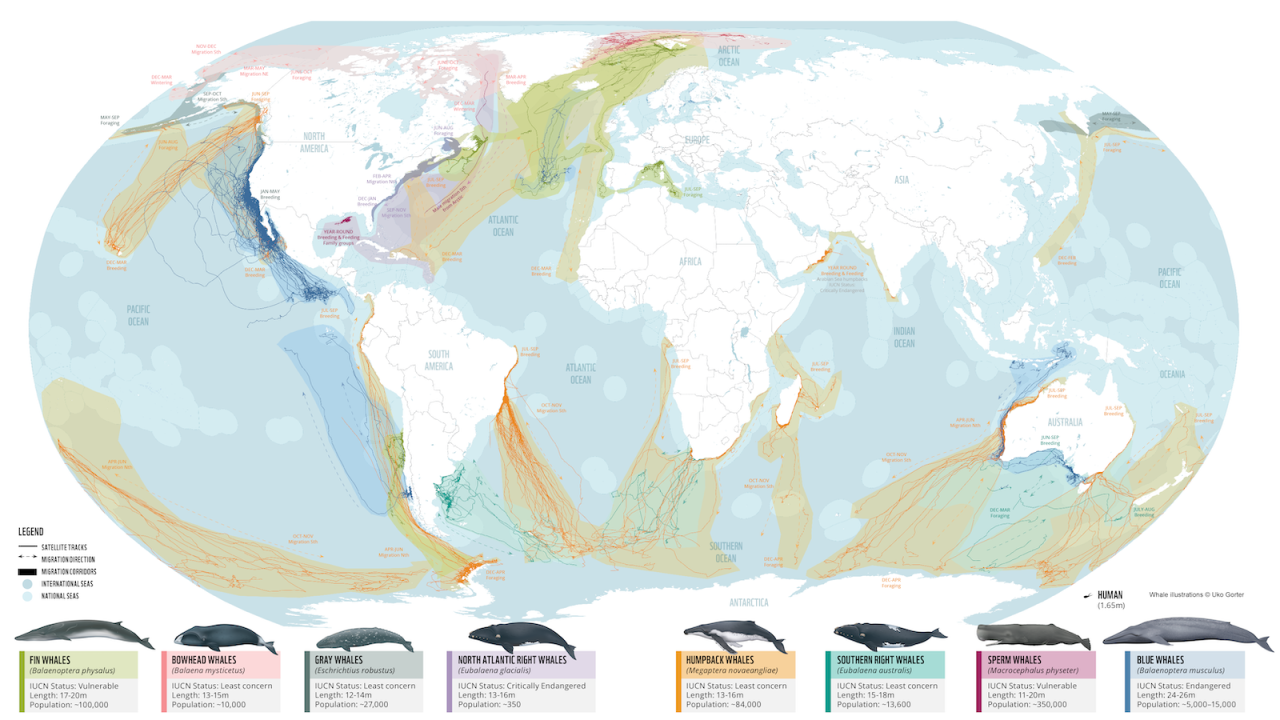
Before examining the unexpected changes, it is essential to appreciate how stable whale migration once appeared. Scientists using a combination of historical whaling records, aerial surveys, satellite telemetry, and photo-identification catalogues had mapped out dozens of distinct whale migration routes. For example:
A. North Atlantic humpback whales consistently moved from summer feeding areas off Iceland, Norway, and the Gulf of Maine to winter breeding grounds near the Cape Verde Islands and the Caribbean.
B. Southern right whales migrated from the cold waters of the Antarctic to temperate South African, Australian, and South American coastlines for calving.
C. Blue whales in the Pacific followed the California Current southward from summer feeding zones off British Columbia down to the warm waters of Costa Rica and the Gulf of California.
D. Western Pacific gray whales traveled along the Russian and Japanese coastlines to their breeding grounds in the South China Sea.
These patterns were not random. They evolved over evolutionary time scales, driven by an optimal balance between energy gain and energy expenditure. Whales fatten themselves in productive polar seas, where summer sunlight triggers massive plankton blooms, and then fast for months while nursing calves in warm, predator-free waters. The predictability of these cycles made them vulnerable. After commercial whaling devastated global populations, the slow recovery of many species was monitored precisely because scientists knew where and when to look for them. But now, that knowledge is increasingly obsolete.
Unexpected Changes: A Global Phenomenon
The first reports of unusual whale movements surfaced in the early 2000s, but most researchers dismissed them as isolated anomalies. A humpback here, a gray whale there perhaps individuals straying off course due to navigational errors or storms. By 2010, however, the evidence became overwhelming. The shifts were not rare; they were systemic. Satellite tracking data compiled by the International Whaling Commission’s Scientific Committee revealed that entire populations were altering their migration timing, distance, and destination.
One of the most dramatic examples comes from the humpback whales that traditionally feed off the coast of California and Oregon. Historically, these animals began their southward journey to Mexico and Central America in late autumn, returning north in early spring. Recent tracking studies show that many humpbacks are now delaying their departure by up to two months. Some individuals are skipping the southern migration entirely, remaining in northern feeding grounds throughout the winter. Conversely, humpback populations in the Southern Ocean have been observed arriving at their Antarctic feeding grounds earlier than usual, departing later, and sometimes forgoing breeding migrations to the tropics in consecutive years.
Gray whales have demonstrated an even more startling shift. For generations, the eastern North Pacific gray whale population followed one of the most predictable migrations on Earth. They spent summers in the Bering and Chukchi Seas, then swam 5,000 to 6,000 miles south to Baja California’s warm lagoons from December through March. But since 2018, unprecedented numbers of gray whales have been observed feeding in the lagoons during summer a time when they should be in the Arctic. Others have abandoned the long journey entirely, instead foraging near the Farallon Islands off San Francisco or even venturing through the Panama Canal into the Atlantic Ocean. One gray whale was photographed off the coast of Namibia in 2021, thousands of miles from its known range.
Why Are Whale Migration Patterns Shifting?
No single cause explains all these changes. Instead, a convergence of environmental and human-driven factors is reshaping the seascape. The most powerful driver, according to nearly every peer-reviewed study published in the last five years, is climate change. But climate change does not act uniformly; it alters whale migration through several distinct mechanisms.
A. Rising Ocean Temperatures
Whales rely on temperature gradients as navigational cues and as indicators of prey availability. As global sea surface temperatures rise, cold-water zones shrink, and warm-water zones expand. The Gulf of Maine, for example, is warming faster than 99% of the world’s oceans. Humpback whales that once timed their arrival to coincide with spring plankton blooms now find those blooms appearing weeks earlier or not at all. When temperature signals become scrambled, whales cannot rely on historical timing. Some populations have responded by shifting their migration window earlier, while others have abandoned timing cues altogether and become resident in feeding areas year-round.
B. Prey Redistribution
Whales do not migrate for the journey itself; they migrate for food. That food is moving. Krill, herring, sand lance, anchovies, and other small schooling fish and crustaceans are highly sensitive to water temperature and ocean chemistry. As the oceans warm, prey species are shifting poleward or into deeper, cooler waters. In the Southern Ocean, Antarctic krill have declined by over 80% in some regions due to sea ice loss and warming. Consequently, humpback and blue whales are traveling farther south or staying longer in polar waters to find sufficient food. In the North Pacific, the collapse of certain forage fish populations has forced gray whales to explore alternative feeding grounds along open coastlines and even inside bays and estuaries behavior previously considered rare.
C. Melting Sea Ice
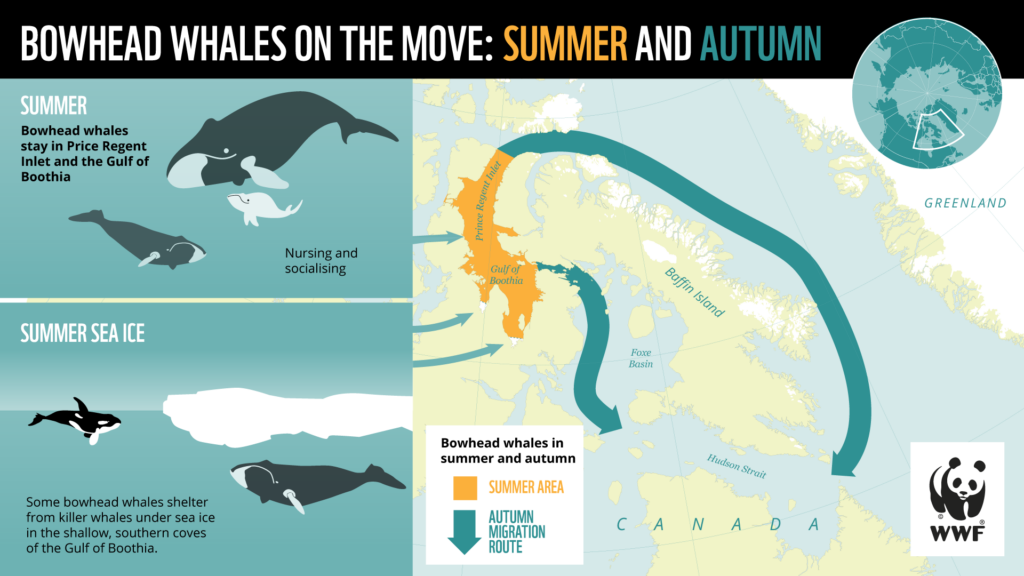
Sea ice acts as both a physical barrier and an ecological engine. In the Arctic, summer sea ice has diminished so dramatically that new shipping routes have opened, and formerly ice-covered regions are now accessible to whales. Bowhead whales, which evolved to live near ice edges, have expanded their summer range dramatically. But more surprisingly, gray whales and humpbacks have pushed northward into the Beaufort and Chukchi Seas earlier each year, and they remain there later into the autumn. Some humpbacks were recorded north of 80° latitude in 2022, an area where no humpback had ever been documented before. While this might seem like an expansion of habitat, it also exposes whales to new risks, including ship strikes and underwater noise from increased maritime traffic.
D. Changing Ocean Currents
Whales often use ocean currents to conserve energy during long migrations. The Gulf Stream, the Kuroshio Current, and the Antarctic Circumpolar Current are not static; their strength, position, and seasonality are shifting due to altered wind patterns and freshwater input from melting ice. Some populations of fin whales that historically used the Canary Current to navigate from the Azores to West Africa have been observed detouring hundreds of miles off course, apparently following displaced current systems. This detour adds energetic costs that can reduce reproductive success.
E. Acoustic Noise Pollution
While not a direct driver of climate-related shifts, increasing underwater noise from shipping, seismic surveys, and military sonar interferes with whale communication and navigation. Whales use sound to share information about migration routes. Elders in a pod traditionally lead younger whales along established paths, passing knowledge across generations. But when noise masks these vocal signals, pods become fragmented, and individual whales may strike out on novel trajectories. Some researchers hypothesize that noise pollution has accelerated the breakdown of traditional migration routes, forcing whales to experiment with new paths that then become permanent if they prove successful.
Consequences of Unexpected Whale Migrations
The sudden reorganization of whale migration patterns is not a contained biological curiosity. It cascades through ecosystems, economies, and conservation frameworks.
A. Ecological Imbalances
Whales are ecosystem engineers. Their feeding, defecation, and carcass deposition cycle essential nutrients like nitrogen and iron from deep waters to surface waters and from high latitudes to the tropics. When whales shift their migration timing, they may miss the peak productivity windows in their feeding grounds, reducing nutrient cycling. Conversely, when they show up in new regions such as humpbacks now commonly sighted off the coast of New York and New Jersey, where they were historically rare they create sudden predation pressure on local fish stocks, potentially destabilizing food webs that include commercial species like menhaden and herring.
B. Increased Ship Strikes
Shipping lanes were designed decades ago based on known whale distributions. Today, those lanes increasingly intersect with unexpected whale concentrations. In 2019, a record number of whale strikes were reported off the coast of Sri Lanka, where blue whales began feeding closer to shore than ever before. In the Santa Barbara Channel, once-predictable humpback migrations now place whales in high-traffic zones during months previously considered safe. Vessel speed restrictions and route adjustments, which take years to implement through international bodies, cannot keep pace with rapidly shifting whale movements.
C. Eco-Tourism Disruption
Coastal communities from the Azores to Hervey Bay, Australia, have built thriving whale-watching industries around predictable migration windows. When whales arrive two months early, stay for shorter periods, or bypass traditional viewing areas entirely, tour operators face economic losses. Some regions have seen 50% drops in whale sightings during peak tourist months. Conversely, unexpected appearances such as gray whales off Southern California in summer create temporary booms but also strain local infrastructure and safety protocols.
D. Conservation Challenges
Marine protected areas (MPAs) and seasonal management zones are static by design. They are drawn on maps based on historical data. When whales no longer use those areas at the expected times, the protected zones become irrelevant. For critically endangered species like the North Atlantic right whale, which has already shifted its feeding grounds away from the protected Gulf of Maine into the unprotected Gulf of St. Lawrence, this mismatch has been deadly. Ship strikes and fishing gear entanglements in unprotected zones have contributed to ongoing population decline.
Case Study: The Humpback Whales of the South Atlantic
To understand the complexity of these shifts, examine the humpback whales that breed off the coast of Brazil. Historically, these whales migrated from summer feeding areas near South Georgia and the Sandwich Islands approximately 4,000 miles south to the warm waters of the Abrolhos Bank, off Bahia state. The journey took roughly six to eight weeks, timed so that mothers could give birth in August and September, when water temperatures peaked.
Since 2015, Brazilian marine biologists using satellite tags have documented a startling change. Nearly 40% of tracked humpbacks no longer reach Abrolhos. Instead, they stop hundreds of miles short, off the coast of Espírito Santo or Rio de Janeiro. Others continue past Abrolhos into waters previously considered too warm and low in productivity. One female humpback was tracked all the way to the mouth of the Amazon River, an area of muddy, nutrient-rich but historically whale-free waters. Researchers believe that changing ocean currents and warming sea surface temperatures have made mid-latitude waters more biologically productive later into the season, offering a new option: whales can feed for longer before breeding, or they can breed in new locations where energy expenditure is lower. The long-term impact on calf survival rates remains unknown.
What These Changes Mean for the Future
If whale migration patterns are shifting unexpectedly now, what will the next decade bring? Climate models project continued warming, continued sea ice loss, and continued redistribution of marine life. Some projections suggest that by 2050, traditional migration routes may become unrecognizable. Several scenarios are possible:
A. Resident populations increase – Whales that abandon migration entirely may evolve into separate resident ecotypes, as has already happened with some gray whales in the Pacific Northwest. These resident whales could face different selective pressures and genetic divergence.
B. Novel interbreeding – When separated populations come into contact in new feeding or breeding grounds, hybridization may occur. Scientists have already documented fin-blue whale hybrids and humpback-blue whale hybrids in the North Atlantic. Increased mixing could produce viable hybrid swarms, potentially altering species identities.
C. Bottlenecks in conservation – Without accurate migration models, conservation resources will be deployed inefficiently. The International Whaling Commission has called for dynamic ocean management, where protected areas shift in real-time based on satellite tracking data. This approach requires unprecedented international cooperation and funding.
D. Adaptive behaviors may save some populations – Not all news is bleak. Humpback whales in the North Pacific have shown remarkable flexibility, learning to follow previously unknown prey schools and teaching these new routes to younger whales. Rapid behavioral adaptation could buffer some populations against the worst effects of habitat change.
What Must Be Done
Given the speed and scale of these shifts, immediate action is required. Marine scientists, policymakers, shipping industries, and conservation organizations must work together. The following measures are urgently needed:
A. Expand real-time whale tracking – Satellite tag deployment should be increased tenfold, with data streaming to open-access platforms used by ships and fisheries.
B. Implement dynamic speed zones – Instead of seasonal fixed zones, use automated ship notifications to slow vessels when whales are nearby, based on acoustic and satellite detections.
C. Fund climate-adaptive marine protected areas – Create legal frameworks allowing MPAs to move with whale populations, not remain anchored to outdated maps.
D. Reduce ocean noise – Regulate ship propeller cavitation, seismic exploration, and military sonar in key habitats. Quieter oceans allow whales to maintain cultural transmission of migration routes.
E. Protect flexible foraging habitats – Since whales are feeding in previously unusual areas, identify and safeguard emerging hotspots before industrial fishing or energy extraction degrades them.
Conclusion
The unexpected shifts in whale migration patterns are one of the clearest signals that the ocean is changing faster than most scientific models predicted only a decade ago. Whales are not abandoning their ancient ways out of whim they are responding to a world where ice is vanishing, prey is fleeing, temperatures are rising, and human noise drowns out the songs of their ancestors. For generations, we marveled at the fidelity of whales to their hidden highways. We mapped those highways, protected them, and built economies around their seasonal rhythms. Now those rhythms are breaking. Whether whales will find new paths to survival depends partly on their own remarkable adaptability, but far more on our willingness to listen, track, and respond as quickly as the oceans themselves are changing. The whales are sending a message in their unexpected detours. It is past time we understood it.