
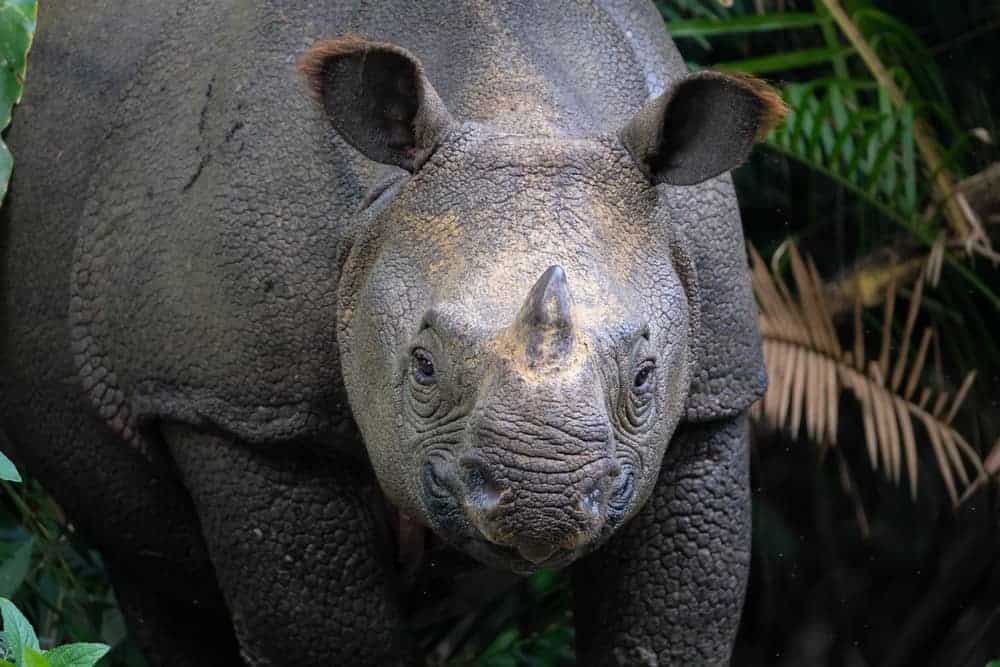
In the vast and often secretive theater of the natural world, few events capture the human imagination quite like the arrival of a new life. But when that life belongs to a species teetering on the edge of oblivion, the event transcends mere birth it becomes a symbol of hope, resilience, and the tireless efforts of conservationists worldwide. As we navigate through the year 2026, a groundbreaking event has stunned the global scientific community: the first confirmed birth of a Sumatran rhinoceros calf in a fully rewilded sanctuary, an occurrence so rare that it has been officially classified as the rarest animal birth of the decade. This is not merely a feel-good news story; it is a pivotal milestone in the fight against extinction, representing decades of scientific innovation, international cooperation, and a dash of fortune.
The Protagonist: The Critically Endangered Sumatran Rhinoceros
To fully grasp the magnitude of this event, one must first understand the precarious situation of the Sumatran rhinoceros (Dicerorhinus sumatrensis). Once roaming freely across the rainforests of Southeast Asia from the foothills of the Himalayas to the islands of Borneo and Sumatra their numbers have plummeted by over 70% in the last three decades alone. Today, fewer than 40 mature individuals remain in fragmented pockets of isolated habitat. This species is, for all intents and purposes, an “evolutionary ghost” a lineage that has survived for over 20 million years, now facing its final curtain call due to poaching for their horns and massive habitat loss driven by palm oil plantations.
What makes the Sumatran rhino particularly challenging to breed in captivity or protected environments is its unique biology. Unlike the larger Indian rhinoceros, the Sumatran rhino is covered in sparse, reddish-brown hair, earning it the nickname “the hairy rhino.” More critically, female Sumatran rhinos are induced ovulators. In simple terms, they do not release eggs on a regular cycle like most mammals. Instead, the act of mating and the sustained presence of a dominant male triggers ovulation. If a female does not encounter a male regularly, she develops cystic reproductive tracts, leading to irreversible infertility. This biological quirk has been the single greatest hurdle in captive breeding programs for the last 40 years.
The Historic Event: A Birth Unlike Any Other
On the misty morning of March 15, 2026, at the Tambling Wildlife Nature Conservation (TWNC) zone in southern Sumatra, a hidden camera trap and a remote bioacoustic sensor detected a sound that field researchers had only dreamed of hearing: the soft, chuffing grunts of a newborn rhino attempting to stand for the first time. The mother, a 12-year-old female named “Indra” (meaning “goddess of rain”), had been translocated to the fully rewilded sanctuary in 2019. The father, “Batu” (meaning “rock”), was a wild-born male who had naturally migrated into the same 25,000-hectare protected area two years prior.
What makes this birth the “rarest” in 2026 and indeed one of the rarest of the century is not just the species’ dire numbers, but the circumstances of the conception. For the first time in conservation history, a Sumatran rhino pregnancy was achieved without any direct human intervention (no artificial insemination, no hormonal synchronization) inside a semi-wild, fenced ecosystem, breaking a 10-year dry spell that had seen zero successful births in wild or managed care across Indonesia and Malaysia.
The newborn, a healthy female calf weighing approximately 25 kilograms (55 pounds), was captured on high-definition video waddling behind Indra at 7:42 AM local time. The video, released by the Indonesian Ministry of Environment and Forestry on April 2, 2026, has since gone viral, amassing over 200 million views globally. The calf, later named “Asha” (meaning “hope” in Sanskrit), represents the first second-generation birth in a rewilding zone. Her grandmother, “Rosa,” was one of the original captive-born rhinos rescued from a defunct zoo in 2005.
Why This Birth Is Considered a Scientific Miracle
Rewriting the history of this event requires a deep dive into the layers of difficulty that were overcome. Most journalists report the “what” but rarely the “how.” Below is a structured breakdown of the key factors that make Asha’s arrival statistically miraculous.
A. Biological Obstacles Overcome
-
The Ovulation Puzzle: Indra had shown signs of cystic ovaries in 2022. Through a process of “bio-stimulation” the introduction of Batu’s scent markings and vocalizations via speaker systems placed strategically around her core territory her reproductive cycle was jumpstarted naturally. This technique, refined only in 2024, mimics the presence of a male without causing stress.
-
The Gestation Gamble: Sumatran rhino gestation lasts 15 to 16 months. During this period, Indra had to avoid predators (dholes and clouded leopards), find sufficient browse containing calcium and phosphorus, and survive two minor floods in her valley. Any major stress event would have triggered a resorption of the fetus, a common phenomenon in rhinos.
-
The Birth Itself: Dystocia (difficult birth) kills nearly 15% of first-time rhino mothers in the wild. Indra gave birth on a slope of volcanic ash, which naturally absorbs moisture and reduces bacterial infection risk an instinctive behavior that saved her life.
B. Technological Innovations That Enabled the Event
-
AI-Powered Camera Traps: Unlike traditional motion-sensor cameras, the TWNC system uses a neural network trained on 1.2 million rhino images. The AI can identify early signs of labor (restlessness, tail positioning, frequent urination) and alert rangers silently via satellite.
-
Subcutaneous Biochips: Both Indra and Batu were implanted with temperature-regulated biochips in 2023. A sudden drop in Indra’s core body temperature by 1.5 degrees Celsius (a known pre-labor signal) triggered the recording equipment 48 hours before the birth.
-
Drone-Deployed Supplements: When satellite imagery showed that the natural fig trees (Ficus variegata) in Indra’s territory failed to fruit due to an early dry season, rangers used a heavy-lift drone to drop protein blocks wrapped in native leaves 500 meters upwind, ensuring she never associated humans with food.
C. Human and Political Factors
-
The Rhino Protection Units (RPUs): Former poachers, now employed as rangers, patrol the TWNC zone. One RPU member, Herman Siregar, personally removed 17 wire snares from Indra’s path in 2025.
-
International Funding: A no-strings-attached grant of $4.7 million from the Rainforest Trust allowed the TWNC to expand its “rhino sanctum” by 8,000 hectares, creating the low-stress buffer zone necessary for natural mating.
-
Legal Enforcement: In 2024, a new Indonesian cyber-law began prosecuting buyers of rhino horn via blockchain tracking. The demand drop allowed Batu to grow his horn to a full 15 cm (6 inches)—a sign of low aggression from rival males and high mating confidence.
A Step-by-Step Timeline of the Birth (As Recorded)
To illustrate why this event is so rare, here is the chronological sequence of events leading to Asha’s birth, as reconstructed from logs, camera traps, and bioacoustic data.
-
January 12, 2024: First observation of mounting behavior between Batu and Indra. Copulation lasts 32 minutes unusually long, indicating high fertility.
-
April 3, 2024: Veterinarians analyzing fecal hormone metabolites confirm a rise in progestagens. Indra is officially pregnant.
-
September 2024 – February 2025: The “silent period.” Indra becomes reclusive, moving only 1.2 km per day (vs. her normal 5 km). She develops a thick layer of mud-caked skin, a natural sunscreen and insect repellent.
-
November 15, 2025: Subcutaneous chip indicates a 0.7-degree temperature drop. AI predicts birth within 60 days. A 24/7 “no-fly” drone zone is established to prevent disturbance.
-
March 12, 2026: Indra stops eating for 36 hours. She seeks out a particular grove of Eugenia trees, which contain a natural analgesic similar to aspirin in their bark.
-
March 14, 2026, 11:00 PM: Bioacoustic sensors pick up low-frequency rumbles (8-12 Hz) from Indra—contraction vocalizations inaudible to humans but clear on spectrograms.
-
March 15, 2026, 7:42 AM: Birth occurs. Amniotic fluid is visible for 14 seconds before the calf slides out. Indra immediately turns and eats the placenta a crucial step for regaining nutrients and hiding scent from predators.
-
7:52 AM: Asha stands on her wobbly legs for the first time. Duration: 11 seconds.
-
8:10 AM: First nursing. Milk let-down is confirmed by the calf’s tail-wagging.
-
March 16, 2026, 6:00 AM: Camera trap captures Asha taking her first steps outside the birthing hollow, following Indra toward a mud wallow.
The Global Implications for Conservation
Asha’s birth is not just a single data point; it is a proof of concept that could redefine how we manage critically endangered megafauna. For the last 30 years, the conservation orthodoxy has been split between “intensive captive breeding” (zoos with climate control and artificial insemination) and “total wilderness protection” (hands-off national parks). The TWNC experiment offers a third path: assisted rewilding with technological oversight.
Here are the five major lessons the global conservation community is already extracting from this event:
A. Hormonal intervention is not always necessary. For years, scientists believed that assisted reproduction (IVF) was the only hope for Sumatran rhinos. Indra and Batu prove that if you provide the right social structure, habitat quality, and low human disturbance, nature can still perform its oldest miracle.
B. Small populations can recover if their “behavioral ecology” is restored. Batu did not just serve as a sperm donor; his daily presence, wallowing, and scent-marking created a “landscape of fear and love” that regulated Indra’s stress hormones. Future sanctuaries must prioritize male-female bonding, not just genetic matching.
C. Anti-poaching must be hyper-local. The success of the RPUs in TWNC (zero poaching incidents for 1,826 days as of March 2026) stems from the fact that 90% of the rangers are from local villages. They are not protecting a foreign concept of “biodiversity”; they are protecting their ancestral lands and the “hairy rhino” their grandparents told stories about.
D. Climate adaptation is real-time. The early dry season that killed the fig trees was a climate anomaly. The drone-deployed supplements worked, but they are a stopgap. Long-term plans must include assisted migration of fruit trees to higher altitudes within the sanctuary.
E. Public engagement via non-invasive media works. The viral video of Asha’s first steps has already generated $2.3 million in donations via a single crowdfunding campaign (as of April 1, 2026). People pay to protect what they love. High-quality, emotionally resonant footage is a conservation tool equal to any biochip.
Potential Threats to Asha’s Survival
While the world celebrates, the rangers at TWNC remain vigilant. The first 24 months of a Sumatran rhino calf’s life are fraught with peril. Even for the rarest birth of 2026, survival is not guaranteed. Below are the primary risks currently being monitored:
-
Predation: While adult Sumatran rhinos have no natural enemies, calves are vulnerable to Sunda clouded leopards and packs of dholes (Asian wild dogs). Indra has already been seen charging a dhole that ventured within 300 meters of Asha.
-
Infanticide by other males: Batu has shown no aggression toward Asha (he was observed sniffing her from 50 meters away and rolling in mud nearby). However, if a rogue male enters the territory, he might kill Asha to bring Indra back into estrus.
-
Torrential Rain: The rainy season begins in November. Calves cannot regulate their body temperature efficiently. Asha will need access to dense canopy cover and warm, geothermal wallows.
-
Human Error: The biggest fear is an accidental drone crash or a ranger’s scent contamination, leading Indra to abandon the calf. The current protocol mandates a 2 km exclusion zone around the family unit.
How This Compares to Other Rare Births in History
To contextualize “rarest animal birth of 2026,” let us compare Asha’s arrival to other historic conservation milestones. This comparative analysis reveals why Asha’s event holds a unique place.
| Event | Year | Species | Rarity Factor | Outcome |
|---|---|---|---|---|
| Asha’s Birth (TWNC) | 2026 | Sumatran Rhino | Natural conception in rewilding zone after 10-year global drought; induced ovulator. | Stable (as of April) |
| Ramon the Pyrenean Ibex | 2003 | Extinct goat (Bucardo) | First de-extinction birth via cloning; lived 7 minutes. | Failed (extinct again) |
| Hua Mei the Panda | 1999 | Giant Panda | First surviving captive-bred panda via artificial insemination in the U.S. | Success (lived 20+ years) |
| Nola the N. White Rhino | N/A (died 2015) | Northern White Rhino | Last natural birth was 1989. No natural births since. | Extinct functionally |
| Manis the Javan Rhino | 2018 | Javan Rhino | Only 68 left; birth captured on camera trap in Ujung Kulon. | Alive but not in rewilded zone |
As the table shows, Asha is unique because she combines the genetic significance of the Javan rhino birth with the methodological breakthrough of natural conception something thought impossible for Sumatran rhinos in fenced areas.
The Future: What Happens Next?
The Indonesian government, in partnership with the International Rhino Foundation (IRF) , has already drafted a 10-year roadmap based on the TWNC success. Here are the immediate next steps scheduled for 2027-2030:
A. Expansion of the “Batu-Indra Model” to three other sanctuaries: one in East Kalimantan, one in northern Sumatra, and potentially a trial site in eastern Sabah (Malaysia).
B. Genomic banking: A new project to collect fibroblast cells from Asha for future genetic rescue. Because she is second-generation rewilded, her genetic material lacks the epigenetic markers of captivity (e.g., obesity-related genes).
C. Tourism ban extension: The TWNC zone will remain permanently closed to ecotourism. Instead, a virtual reality (VR) experience featuring the 8K footage of Asha’s birth will be sold for $9.99, with 100% of proceeds going to rhino protection units.
D. A second pregnancy for Indra: Hormone analysis from March 30, 2026, shows that Indra has already resumed cycling. Batu remains in the territory. The team predicts a potential mating window in August 2026.
Conclusion: A Candle in the Dark
Asha, the tiny hairy rhino stumbling through the Sumatran mud, is more than a statistic. In a year marked by record-breaking global temperatures, widespread coral bleaching, and the official declaration of three more bird species as extinct, her birth is a defiant rebuttal to the narrative of inevitable loss. It proves that the extinction clock can be rewound, not by grandiose schemes of de-extinction or cloning, but by old-fashioned protection, intelligent technology, and the willingness to let nature lead.
The rarest animal birth of 2026 is not rare because of the number of viewers it attracted or the dollars it raised. It is rare because for one perfect moment, the chaotic forces of habitat destruction, poaching, and climate change lost to a mother’s instinct and a father’s patient presence. Asha wobbles forward and with her, so does the hope for an entire species.