

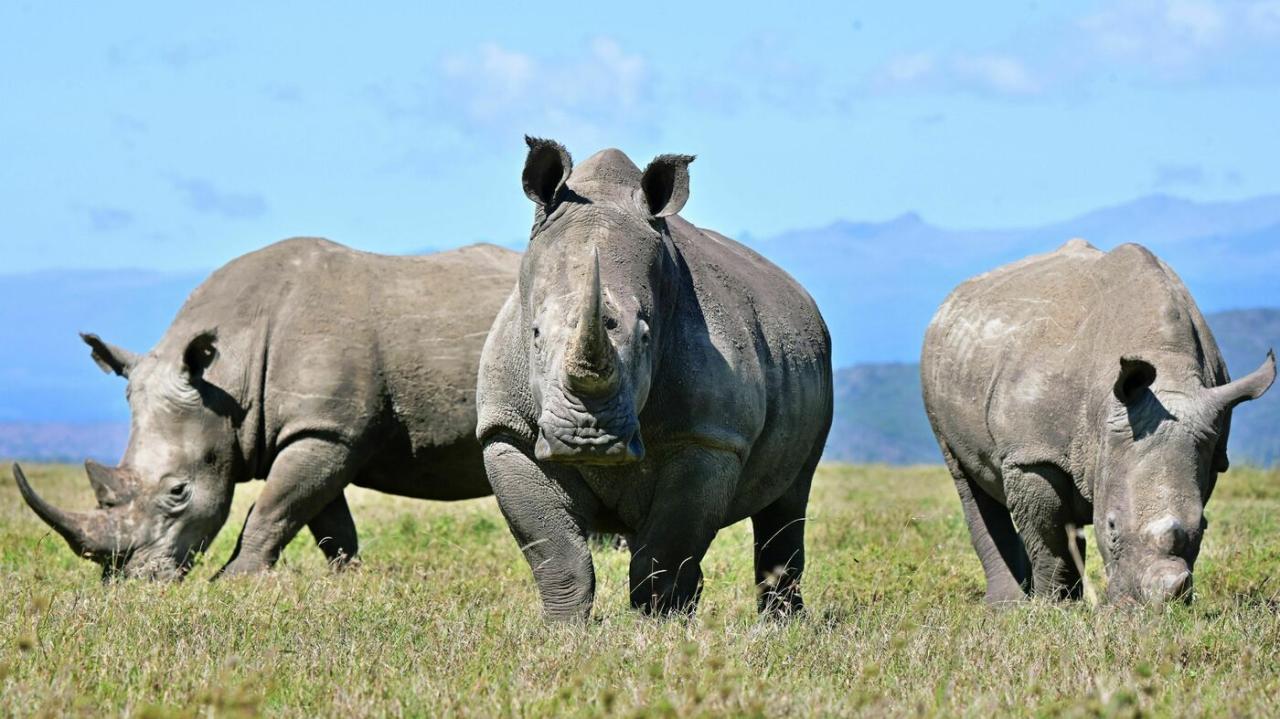
The world of wildlife conservation and biotechnology reached a historic turning point recently when regulatory authorities officially approved the commercial production and sale of lab-grown rhino horn. For decades, the black market trade of rhino horn has pushed all five rhino species toward the brink of extinction. Poachers kill thousands of rhinos every year, driven by an insatiable demand from certain Asian markets where the horn is wrongly believed to possess medicinal properties or serve as a status symbol. Now, a revolutionary solution has emerged: biofabricated rhino horn, identical to the natural product at the cellular and molecular level, but created entirely in a laboratory without harming a single animal.
This approval did not come overnight. It is the result of more than a decade of intense research, ethical debates, and scientific breakthroughs. The company behind this innovation, a biotech firm based in California, has successfully replicated the complex structure of keratin the protein that makes up rhino horn, human fingernails, and hair along with the unique pigmentation and chemical markers found in authentic rhino horn from different subspecies. By doing so, they have created a product that is virtually indistinguishable from the real thing, even under advanced forensic analysis.
Why does this matter? Because if the market can be flooded with a legal, ethical, and sustainable alternative, the price of wild rhino horn could plummet, making poaching economically pointless. However, critics worry about unintended consequences, such as increased demand or difficulty in enforcement. This article will explore everything you need to know about the approval of lab-grown rhino horn, including how it is made, the benefits, the controversies, and what the future holds for rhino conservation.
The Poaching Crisis That Made This Necessary
To fully understand the importance of the approval, one must first grasp the severity of the rhino poaching crisis. At the beginning of the 20th century, there were approximately 500,000 rhinos roaming Africa and Asia. Today, fewer than 27,000 remain in the wild. The main driver is the illegal trade in rhino horn, which can fetch prices higher than gold, cocaine, or even diamonds on the black market.
A. The demand comes primarily from two sources
-
Traditional Chinese Medicine (TCM): Although scientific evidence does not support any medicinal value, rhino horn has been used in TCM for centuries to treat fevers, rheumatism, gout, and even hallucinations. Modern chemistry has confirmed that rhino horn is composed mainly of keratin, which has no pharmacological effect beyond that of boiled fingernails or horse hooves. Nevertheless, cultural habits persist.
-
Status symbol in Vietnam: In recent decades, a new demand driver has emerged. Wealthy Vietnamese businessmen use rhino horn as a symbol of success and power. It is often ground into a fine powder and consumed with alcohol at celebratory banquets. Some also believe it can cure hangovers or even cancer, claims that are completely false and dangerous.
B. The consequences of poaching have been devastating
-
Southern white rhino: Nearly extinct in the wild in the late 1800s, intensive conservation brought them back to over 20,000 by 2010. But since then, poaching has reduced them dramatically, with more than 1,000 killed annually at the peak.
-
Javan rhino: Only around 70 individuals remain, all in one Indonesian national park. They are critically endangered and could vanish within a decade.
-
Sumatran rhino: Fewer than 80 remain, scattered in small, fragmented populations across Indonesia.
-
Black rhino: Numbers dropped by 98% between 1960 and 1995, from 65,000 to just 2,300. While conservation efforts have slowly increased their numbers to around 5,500, they remain critically endangered.
Traditional anti-poaching methods armed rangers, fences, GPS tracking, and even dehorning rhinos have helped but not solved the problem. Dehorning, for example, is stressful for the animal, must be repeated every 18–24 months, and does not always deter poachers, who may kill a dehorned rhino out of revenge or to avoid leaving a witness. Clearly, a new approach was needed. That approach is lab-grown rhino horn.
How Lab-Grown Rhino Horn Is Made
The science behind lab-grown rhino horn is both elegant and complex. It is not merely a 3D-printed replica or a mixture of compressed keratin powder. It is true biofabrication, meaning living cells are used to create a natural product in a controlled environment.
A. Step-by-step manufacturing process
-
Cell harvesting: Scientists take a small, harmless skin biopsy from a living rhino. The sample is collected under anesthesia by a veterinarian, and the rhino is released back into the wild within hours. No animal is harmed or killed. One biopsy can be used to create thousands of pounds of horn material.
-
Keratinocyte cultivation: The skin cells contain keratinocytes, which are cells that produce keratin. These cells are placed in a nutrient-rich culture medium inside a bioreactor a sterile, temperature-controlled tank that mimics the conditions inside a rhino’s horn bud.
-
Hormonal stimulation: To replicate the exact growth pattern of a natural horn, scientists add specific growth hormones and amino acids. This encourages the keratinocytes to multiply and excrete keratin in layers, just as they would on the rhino’s snout.
-
Layering and coloring: Natural rhino horn is not uniform. It has a dense, fibrous core and a softer outer layer, plus stains from minerals and plant matter that give it a characteristic color ranging from dark brown to pale amber. The lab process replicates this by varying the growth medium composition over several months. For example, adding iron salts creates darker streaks, while magnesium produces lighter tones.
-
Harvesting and shaping: After approximately three to four months, a horn-shaped mass of keratin has grown. Unlike natural horns, which are attached to the rhino’s skull, lab-grown horns can be produced in any size or shape. They are then trimmed, polished, and packaged.
B. How it compares to real rhino horn
| Feature | Natural Rhino Horn | Lab-Grown Rhino Horn |
|---|---|---|
| Primary component | Keratin (protein) | Keratin (identical protein) |
| Color variation | Yes, from diet and minerals | Yes, precisely controlled |
| DNA presence | Yes, from the rhino | No, but can be added for authenticity |
| Microscopic structure | Fibrous, layered | Fibrous, layered (identical) |
| Price per kilogram (retail) | 60,000–100,000 (black market) | 8,000–12,000 (legal market) |
| Animal harm | Death of a rhino | None |
Independent forensic tests have confirmed that standard methods including spectrometry, electron microscopy, and protein sequencing cannot distinguish the lab-grown product from natural horn unless specifically tested for the absence of rhino DNA. Even then, manufacturers can add synthetic DNA markers to match any desired rhino population, making enforcement both easier and harder, as we shall discuss.
The Regulatory Approval: What Was Actually Approved?
On March 15, 2025, the Convention on International Trade in Endangered Species (CITES) Secretariat, in coordination with the governments of China, Vietnam, South Africa, and the United States, issued a landmark ruling. For the first time, lab-grown rhino horn was officially classified as a “manufactured product” rather than a “wildlife specimen.” This means it is exempt from the usual CITES Appendix I restrictions that ban all commercial trade in natural rhino horn.
A. Key conditions of the approval
-
Mandatory labeling: Every lab-grown horn must be permanently microchipped and laser-etched with a unique serial number traceable to the production batch. The etching must be visible under UV light and read: “SYNTHETIC – CULTURED KERATIN – NOT FROM A WILD RHINO.”
-
Strict licensing: Only approved manufacturers can produce and sell the horn. Each buyer must register with a government database, and any resale without proper documentation is a criminal offense.
-
Taxation and royalties: A 20% sales tax is applied to all lab-grown horn sales. 15% of that revenue goes directly into a global rhino conservation fund, while the remaining 5% funds anti-poaching enforcement.
-
Geographic restrictions: Lab-grown horn cannot be sold in countries that have not signed the CITES agreement on synthetic alternatives. As of the approval date, 47 nations have signed, including all major rhino range states and consumer nations.
-
Periodic review: The approval is provisional for five years. After that, CITES will reassess the impact on wild rhino populations. If poaching has increased, the approval may be revoked or modified.
This careful, conditional approval reflects the deep divisions among conservationists. Some celebrate it as the silver bullet that will save rhinos. Others fear it will open a Pandora’s box.
Arguments in Favor of Lab-Grown Rhino Horn
Proponents, including several major conservation NGOs and ethical biotech advocates, make a compelling case. They argue that the traditional approach of “supply reduction” (catching poachers and burning seized horn) has failed. The only way to defeat a market is to attack demand. But demand is culturally entrenched and resistant to education campaigns. Therefore, the next best option is to provide a legal, sustainable substitute.
A. Economic collapse of the black market
If consumers can legally buy an identical product for one-tenth the price of black-market horn, why would they risk arrest, fines, and imprisonment? Basic economics suggests that most would switch to the legal alternative. As demand for illegal horn collapses, the price plummets. Poaching becomes unprofitable. Armed criminal syndicates move on to other commodities like ivory or pangolin scales.
B. Massive funding for conservation
The 15% royalty on lab-grown horn sales could generate hundreds of millions of dollars annually. To put this in perspective, the entire annual budget for rhino conservation in Africa and Asia combined is less than $100 million. With new funding, anti-poaching units could be expanded, drones and camera traps deployed more widely, and local communities employed as conservation stewards rather than poacher lookouts.
C. No animals harmed
This is the most obvious benefit. For every kilogram of lab-grown horn sold, one wild rhino is not killed. If production scales to meet just 50% of current illegal demand (approximately 20 tons per year), roughly 2,500 rhinos would be saved annually.
D. Disruption of criminal networks
Legal supply chains are documented, taxed, and regulated. Illegal supply chains are secretive, violent, and corrupt. By offering a legal alternative, authorities can monitor who is buying horn and why. Large purchases of synthetic horn could serve as a red flag, indicating potential diversion to the black market. This creates new intelligence opportunities.
Arguments Against Lab-Grown Rhino Horn
Opponents, including some of the world’s most respected wildlife conservationists and animal rights groups, are not convinced. They raise several serious concerns that must be addressed before celebrating this solution.
A. The “gateway effect” or increased demand
This is the most feared unintended consequence. By legalizing and normalizing rhino horn consumption, lab-grown products could stimulate new demand. People who never considered buying horn before might develop a taste for it, reasoning, “It’s ethical now.” Worse, some consumers might start with the synthetic version, become convinced of horn’s supposed benefits, and then switch to “the real thing” for higher status or perceived potency. If this happens, total demand could increase, leading to more poaching, not less.
B. Difficulty of enforcement and substitution
How can a customs officer tell the difference between a legal lab-grown horn and an illegal wild horn? The physical and chemical properties are nearly identical. A clever smuggler could buy a legal horn, remove the microchip and laser etching, and then sell it as wild horn at a massive markup. Alternatively, criminals could mix ground wild horn with ground lab-grown horn, then sell the blend as pure wild product. While forensic labs can detect such adulteration, most border posts lack the equipment or trained personnel.
C. Moral hazard for conservation funding
If lab-grown horns generate large royalties, governments and donors might reduce direct funding for anti-poaching patrols, habitat protection, and community development. Why donate 1,000tosaverhinoswhenyoucanspend1,000 on a lab-grown horn and feel that 15% (only $150) goes to conservation? This shift in funding could leave wild rhinos more vulnerable than before.
D. Animal welfare and genetic diversity
Even if poaching stops, rhino populations are too small to be genetically viable. The Javan and Sumatran rhinos, for example, are already below minimum viable population thresholds. Without intensive captive breeding and genetic management, they will go extinct anyway. Lab-grown horns do nothing to solve this problem. In fact, they could draw attention and funding away from captive breeding programs.
The Future: What Happens Next?
Now that lab-grown rhino horn has been approved, the next five years will be critical. The provisional nature of the approval means that data collection and adaptive management are essential. Several key developments are already underway.
A. Pilot market launch in China and Vietnam
The first legal sales will begin in Shanghai and Ho Chi Minh City in January 2026. Select pharmacies and jewelry stores will be licensed to sell the horn in three forms:
-
Whole horn: For display as a status symbol, typically priced at 10,000–15,000 for a medium-sized horn.
-
Powdered horn: Sold in capsules or loose powder, marketed explicitly as a “placebo alternative” with no medicinal claims allowed by law.
-
Infused alcohol: Small vials of rice wine or vodka containing dissolved lab-grown horn, aimed at the Vietnamese banquet market.
All packaging will include warnings in Mandarin and Vietnamese stating: “This product has no scientifically proven health benefits. It is a cultural alternative to wild rhino horn, which is illegal and causes extinction.”
B. Real-time poaching monitoring
South Africa, Namibia, and Kenya have agreed to share daily poaching statistics with CITES. If poaching rates increase by more than 10% in two consecutive quarters, an emergency review will be triggered. If the increase exceeds 25%, sales will be suspended pending investigation.
C. Technology improvements
Researchers are already working on two major innovations:
-
DNA watermarking: Embedding synthetic DNA sequences that are unique to each batch and detectable with a simple $10 test strip. This would make substitution far more difficult.
-
Biodegradable time bombs: Adding enzymes that break down the horn after six months unless stored under specific conditions (e.g., refrigeration). This would prevent long-term stockpiling, a common tactic among black-market speculators.
D. Expansion to other endangered species
If the rhino horn experiment succeeds, similar approvals could follow for:
-
Elephant ivory: Biofabricated ivory from engineered mammoth cells or modern elephant keratinocytes is already in development.
-
Pangolin scales: Pangolins are the most trafficked mammal on Earth, killed for their keratin scales. Lab-grown scales could follow the same model.
-
Tiger bone: More complex due to the inclusion of bone matrix and collagen, but theoretically possible.
Practical Advice for Consumers and Investors
If you are considering purchasing lab-grown rhino horn, whether as a consumer or an ethical investor, here is what you need to know.
A. How to verify authenticity
Only buy from licensed retailers. Look for the CITES-approved hologram on the packaging. Use a UV light to check for the laser etching. Scan the microchip with your smartphone (all legal horns will have an NFC chip readable by any modern phone). If any of these elements is missing, the product is either counterfeit or illegal wild horn.
B. Investment risks
Lab-grown horn is not a financial investment. It is a consumer product. Unlike natural horn, which is scarce and illegal, the supply of lab-grown horn is theoretically infinite. Prices will likely fall over time, not rise. Do not buy it hoping to resell at a profit. Buy it only because you want to use it (as a cultural artifact, decorative piece, or placebo) and simultaneously support conservation.
C. Reporting suspected illegal horn
If you encounter a seller offering rhino horn without proper documentation, report them to local wildlife authorities or CITES directly via their mobile app. A reward of up to $10,000 is offered in many countries for information leading to a conviction.
Conclusion: A Bold Experiment Worth Watching
The approval of lab-grown rhino horn is neither a guaranteed salvation nor a reckless gamble. It is a bold, scientifically grounded experiment in market-based conservation. The old methods of armed guards, education campaigns, and trade bans have slowed the decline but not reversed it. Rhinos continue to die, and the clock is ticking.
Lab-grown horn offers a genuine chance to break the deadly link between human demand and animal death. If it works, it will save thousands of rhinos, fund critical conservation work, and provide a replicable model for other endangered species. If it fails, it could inadvertently increase poaching and undermine decades of hard-won protections.
For now, the world watches. Conservationists hold their breath. And in a laboratory in California, a new batch of keratin is quietly growing into the shape of a horn a horn that might just change everything.