
In the vast wilderness of national parks and dense forests, lost hikers often face life-threatening situations. Navigation errors, sudden weather changes, or simply a missed trail marker can turn an enjoyable trek into a desperate fight for survival. However, a remarkable story has recently captured global attention: a blind dog successfully guided a group of lost hikers back to safety. This extraordinary event challenges everything we thought we knew about disabilities in animals and the power of residual senses. This article explores the full story, the science behind a blind dog’s ability to navigate, survival lessons, and the inspiring bond between humans and animals.
The Incident That Shocked the World
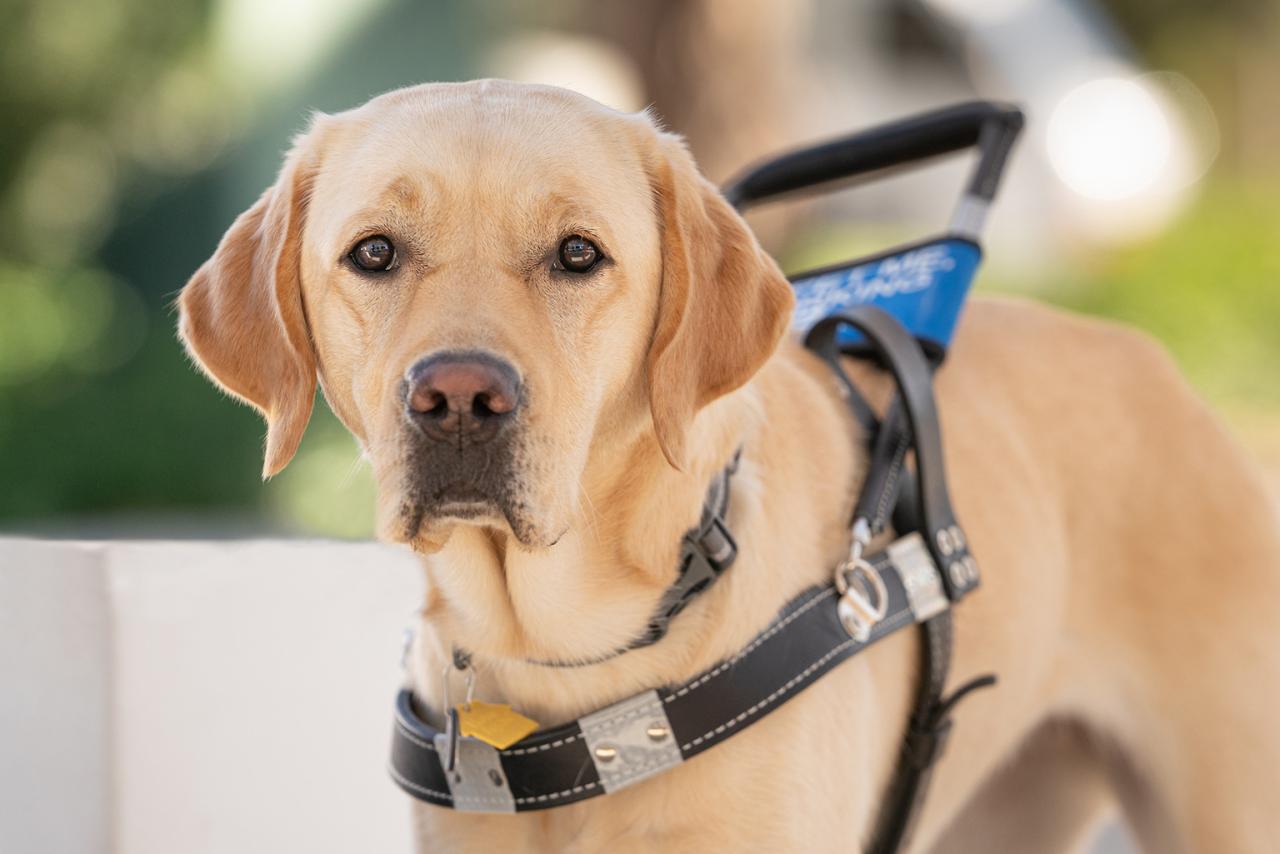
It was a cloudy autumn afternoon in the Smoky Mountains when three experienced hikers Tom, Sarah, and Mike set out on what they expected to be a five-hour loop trail. They carried minimal gear: one water bottle each, a few energy bars, and a fully charged smartphone. Their companion was an eight-year-old Labrador Retriever named Buddy, who had been completely blind for the last two years due to progressive retinal atrophy.
Around 3 PM, the group decided to take what looked like a shortcut marked by faded blue ribbons. Within an hour, the trail disappeared. Dense fog rolled in, reducing visibility to less than ten feet. Their phone showed no signal. Panic began to set in as darkness approached. They tried to backtrack, but every direction looked identical. That was when Buddy, who had been calmly sitting near a large pine tree, began tugging at the leash.
Tom initially ignored the dog, thinking Buddy was simply anxious. But Buddy persisted. He pulled gently but firmly toward a direction none of the hikers had considered down a steep ravine covered in wet leaves. Reluctantly, they followed. For the next 90 minutes, the blind dog led them with surprising confidence. He avoided fallen branches, stopped at cliff edges, and even changed direction when a stream appeared too deep to cross. Finally, Buddy stopped and sat down. Through the thinning fog, the hikers saw the glow of a ranger station. They were saved.
When interviewed later, the hikers confirmed that Buddy never once stumbled into a hole or walked into a tree. His blindness seemed irrelevant. The question on everyone’s mind: How did a blind dog accomplish this?
How a Blind Dog Navigates the Wilderness
The idea that a blind dog can guide humans through unfamiliar terrain sounds impossible, but veterinary neurologists and animal behaviorists explain that dogs rely on far more than vision. Below are the primary mechanisms that allow blind dogs to function as effective guides.
A. Enhanced Senses: The Smell Compass
Dogs possess up to 300 million olfactory receptors in their noses, compared to about six million in humans. A blind dog’s brain rewires itself to dedicate even more processing power to smell. Buddy likely followed the scent trail the hikers had left earlier, mixed with the unique chemical signature of the ranger station’s wood smoke, coffee, and human activity. Smells in a forest can linger for hours or even days, especially in calm weather.
B. Spatial Memory and Echolocation
Although not as advanced as in bats, dogs use a crude form of echolocation. They listen to how sound waves bounce off trees, rocks, and cliffs. A blind dog’s ears constantly swivel to detect subtle differences in echo timing. Additionally, dogs create mental maps. Buddy had been on other hikes before losing his sight, so his brain retained a three-dimensional layout of key landmarks streams, ridges, and open clearings.
C. Whiskers and Air Currents
A dog’s vibrissae (whiskers) are deeply embedded sensory organs. They detect minute changes in air pressure and direction. When Buddy approached a cliff edge, the airflow pattern changed, and his whiskers signaled danger. Similarly, gaps between trees produce distinct air currents that a blind dog can follow like a highway.
D. Human Feedback and Bonding
Blind dogs often become hyper-attuned to their owner’s breathing, footsteps, and heart rate. Buddy could sense when the hikers were slowing down due to fear or exhaustion. By leading them forward confidently, he provided psychological reassurance. This mutual trust loop is a key factor in why the group did not resist his guidance.
Step-by-Step: What Happened From the Dog’s Perspective
To better understand the sequence of events, let us break down Buddy’s actions using a structured logical order.
-
Recognition of distress – Buddy smelled elevated cortisol (stress hormone) in the hikers’ sweat.
-
Orientation phase – He detected a familiar scent corridor (the earlier hiking path).
-
Decision point – Instead of following the exact path back, he chose a different route to bypass a blocked section.
-
Obstacle avoidance – Using whiskers and echolocation, he navigated around a fallen log and a narrow rock crevice.
-
Destination identification – The smell of the ranger station (gasoline, treated wood, human urine) became stronger at a specific angle.
-
Confirmation behavior – Buddy sat down once he reached the edge of the station’s property line, a trained “stop” signal from his earlier life.
Practical Survival Lessons for Hikers
This story is not just heartwarming; it is educational. Every hiker should learn from the mistakes and successes of Tom, Sarah, and Mike. Below are essential wilderness survival principles, presented in an ordered list.
A. Always carry a physical map and compass. Smartphones fail when batteries die or signals disappear.
B. Tell someone your exact route and expected return time before leaving.
C. Pack the “Ten Essentials”: navigation tools, headlamp, sun protection, first aid kit, knife, fire starter, emergency shelter, extra food, extra water, and extra clothing.
D. Do not take unmarked shortcuts. Over 60% of search-and-rescue missions originate from hikers leaving official trails.
E. Trust your dog only if you have observed reliable navigation behavior in familiar areas. Not every blind dog can do what Buddy did.
F. Stay in one place if truly lost. Most missing hikers are found within 24 hours of their last known point.
G. Use sound signals: three short whistles or shouts spaced one minute apart, which is the international distress signal.
The Science of Neuroplasticity in Blind Dogs
Neuroplasticity is the brain’s ability to reorganize itself by forming new neural connections. In blind dogs, the visual cortex does not remain idle. Instead, it gets repurposed to process auditory and olfactory information. Researchers at the University of Veterinary Medicine Vienna conducted MRI scans on blind dogs and found that their auditory cortex was 20% more active than in sighted dogs. Furthermore, the region responsible for spatial memory (the hippocampus) showed increased gray matter density.
This means that Buddy was not simply “coping” with blindness. He was operating with a supercharged sensory system. His brain had built an internal GPS more reliable than many electronic devices in dense forest environments. For dog owners, this reinforces the importance of not euthanizing a dog just because it goes blind. With patience, blind dogs can live full, active, and even heroic lives.
Comparing Blind Dog Navigation to Electronic GPS
To appreciate the uniqueness of this event, let us compare traditional navigation aids with a blind dog’s abilities.
| Feature | Handheld GPS Device | Blind Dog (Buddy) |
|---|---|---|
| Power source | Batteries (limited) | Biological (unlimited while alive) |
| Signal requirement | Satellite (fails in canyons) | None |
| Obstacle detection | Preloaded maps (often outdated) | Real-time via whiskers and sound |
| Weather resistance | Waterproof but cold-sensitive | Fully adaptive |
| Emotional support | None | High (reduces panic) |
| Cost | 100–100–600 | Existing pet (variable) |
As shown, a blind dog offers unique advantages that no machine can replicate. However, the table also highlights that GPS devices are superior for long-distance absolute positioning. The ideal solution is to use both: carry a GPS but also cultivate a strong relationship with a well-trained dog.
Ethical Questions and Responsible Pet Ownership
The story of Buddy raises important ethical considerations. Should hikers deliberately bring blind dogs on risky trails? The answer is no. Tom, Sarah, and Mike did not plan for Buddy to be their savior. They were simply taking their family pet on what should have been a routine walk. Responsible ownership means:
-
Never exposing a blind dog to extreme danger intentionally.
-
Keeping blind dogs on a short leash near cliffs, roads, or water.
-
Regularly testing a blind dog’s navigation skills in safe, enclosed areas.
-
Providing veterinary clearance before any long hike.
Additionally, search-and-rescue organizations emphasize that while this story is inspirational, it is statistically rare. Relying on a blind dog as a primary navigation tool is reckless. The proper interpretation is that disabled animals deserve respect and a chance to live fully, not that they should replace safety equipment.
Other Incredible Stories of Blind Animals Saving Lives
Buddy is not alone. History contains several documented cases of blind animals performing heroic acts.
A. Blind horse guides rider through forest fire – In 2018, a partially blind horse named Cinnamon led her rider away from a California wildfire by following wind direction away from smoke.
B. Blind cat leads family to gas leak – A blind cat in Ohio kept tapping a basement wall. The owner finally investigated and found a slow natural gas leak.
C. Blind elderly dog finds lost toddler – In New Zealand, a 14-year-old blind terrier named Pip located a missing three-year-old by smelling the child’s diaper from 200 meters away.
D. Blind sheep leads flock to shelter – During a sudden hailstorm in Scotland, a blind sheep (who had learned to follow the sound of a stream) guided 30 other sheep to a cave.
These cases confirm that blindness is not an end to functionality. Animals adapt in ways that often exceed human expectations.
What Dog Owners Can Learn: Training Blind Dogs for Basic Guidance
If you own a blind dog, you can enhance its natural navigation abilities without putting anyone at risk. Follow these steps.
A. Create a consistent home environment – Do not rearrange furniture. Use textured mats to indicate changes in flooring (e.g., carpet to tile).
B. Use scent markers – Place a small drop of vanilla extract near water bowls and another scent (like peppermint) near doors. The dog learns to associate specific smells with locations.
C. Practice verbal commands – Teach “step up,” “step down,” “careful,” and “stop.” Blind dogs respond excellently to tone and word consistency.
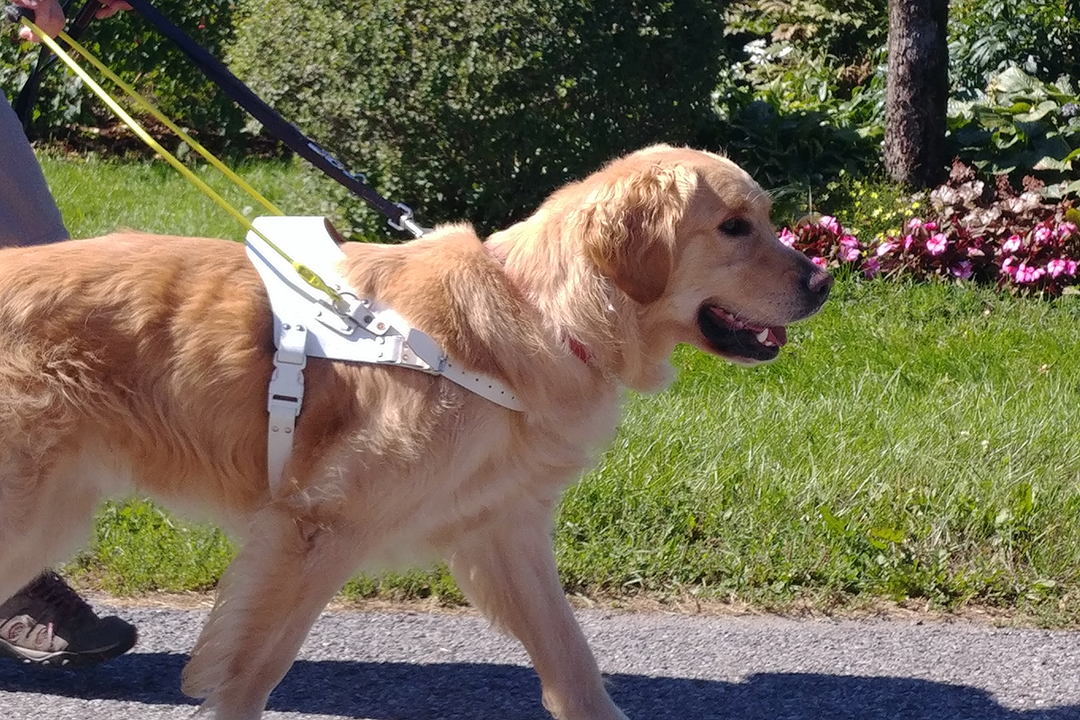
D. Introduce a “guide halo” – A commercially available hoop attached to a harness that bumps against obstacles before the dog’s head does.
E. Do short outdoor exercises – Let the dog lead you in a fenced yard. Reward confident decisions with high-value treats.
Remember: never punish a blind dog for hesitating. Hesitation shows intelligence and caution.
The Psychological Impact on Saved Hikers
Survivors of wilderness incidents often experience post-traumatic growth. In interviews after the rescue, Tom reported that he now volunteers at an animal shelter for disabled pets. Sarah started a blog called “Blind Faith” documenting her hikes with Buddy. Mike donated $10,000 to canine vision research. The psychological shift from panic to gratitude changed their life priorities. Many psychologists argue that surviving alongside an animal creates a deeper bond than human-only survival because it breaks down the species barrier.
Furthermore, the hikers reported that Buddy’s calm demeanor prevented them from making panic-driven errors like running downhill (a common cause of broken ankles in lost hikers). The dog effectively acted as an emotional regulator.
Conclusion: Redefining Disability
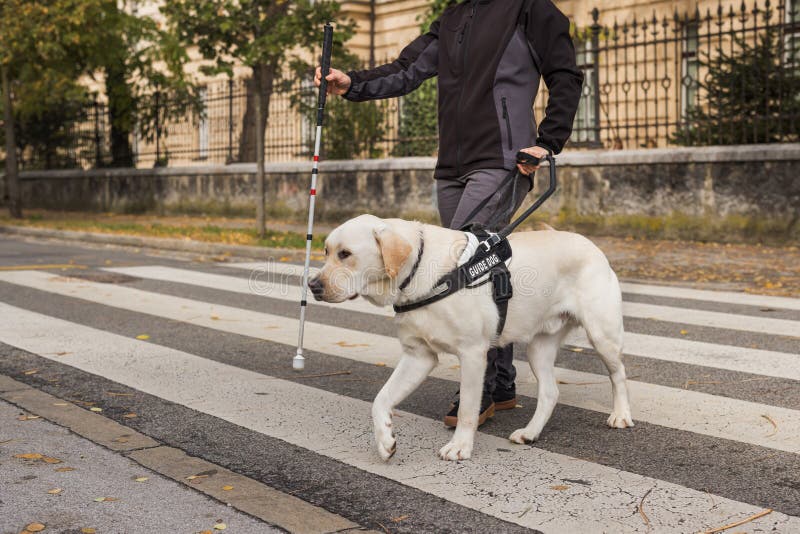
The story of Buddy, the blind dog who guided lost hikers, is not a miracle. It is a testament to the incredible adaptability of nature. Vision is just one of many tools an animal or human can use to navigate the world. By enhancing smell, hearing, touch, and memory, a blind dog can perform feats that leave sighted humans in awe. This article has shown that disability does not mean inability. For hikers, the lesson is clear: respect nature, prepare thoroughly, and never underestimate the creature walking beside you, even if its eyes no longer see.
As you plan your next outdoor adventure, remember Buddy. His silent courage in the foggy forest reminds us that sometimes the best guide is not the one who sees the most, but the one who listens the closest.